

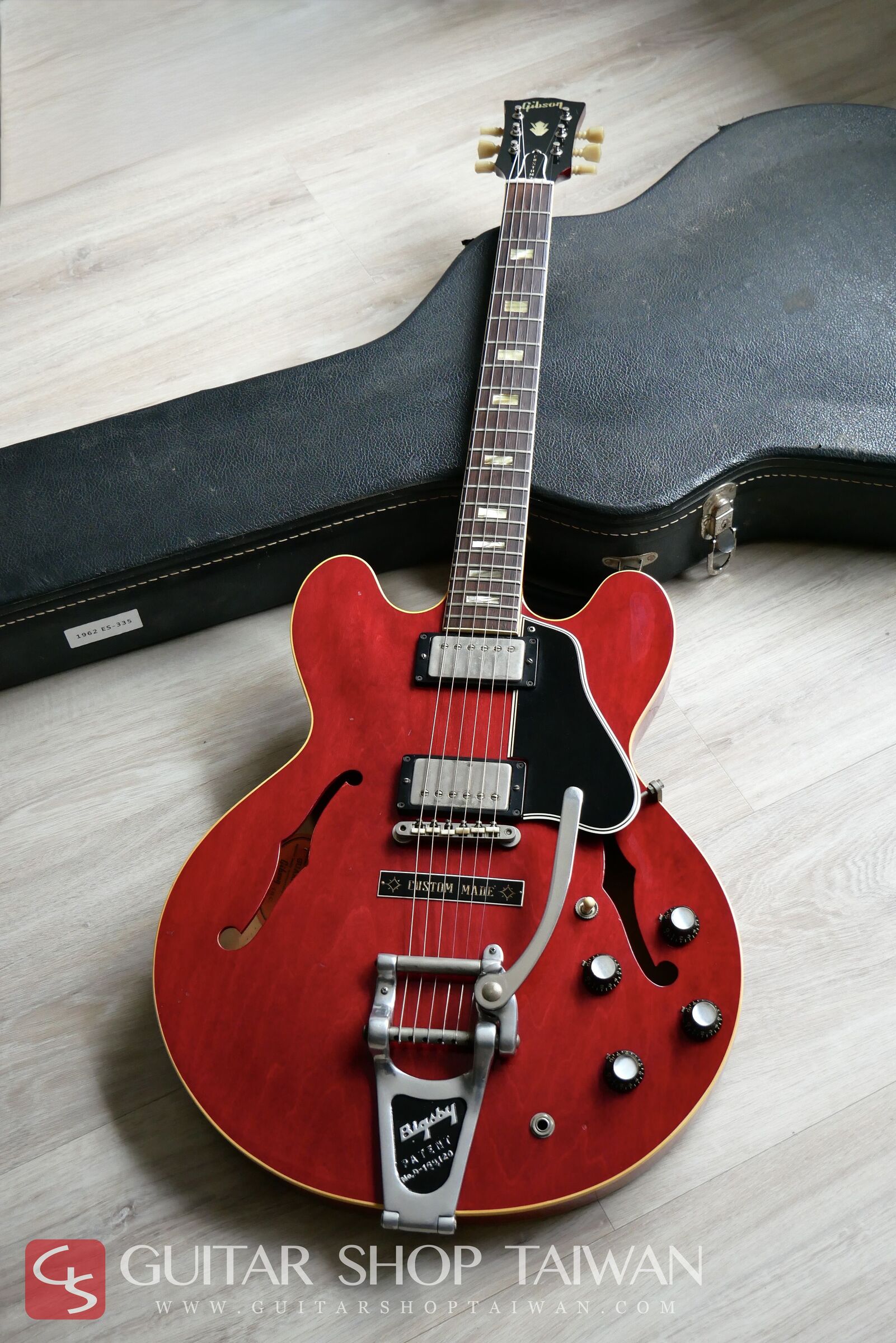
Vintage 1962 Gibson ES-335 Bigsby Cherry Red
而ES-335的歷史可以追溯到1957年,1957年初,Gibson總裁Ted McCarty找到了首席木工工程師Larry Allers,請他創建一款以ES系列為基礎,但中央有實心木塊,一種介於實心與空心之間的薄型吉他。因為ES系列的設計經驗,使ES-335從Gibson位於密西根州卡拉馬祖的工廠僅花了一年便被設計完成並實現量產。Ted McCarty與Larry Allers共同的解決方案非常巧妙,他們使用經過刻槽切割(Kerf Cut)的雲杉木條,使條狀木材可以自由彎曲,並將其黏在琴身中心木塊的前後兩側。這些條狀木材能夠隨著層壓而形成琴身的面板與背板的拱形弧度。而琴身的面板與背板、側板最初是採用楓木、白楊木、楓木的三層層壓設計,內外兩層楓木的木紋方向相同,為了增強結構,中間的白楊木層方向則為90度,這就是1958年首次問世的ES-335。
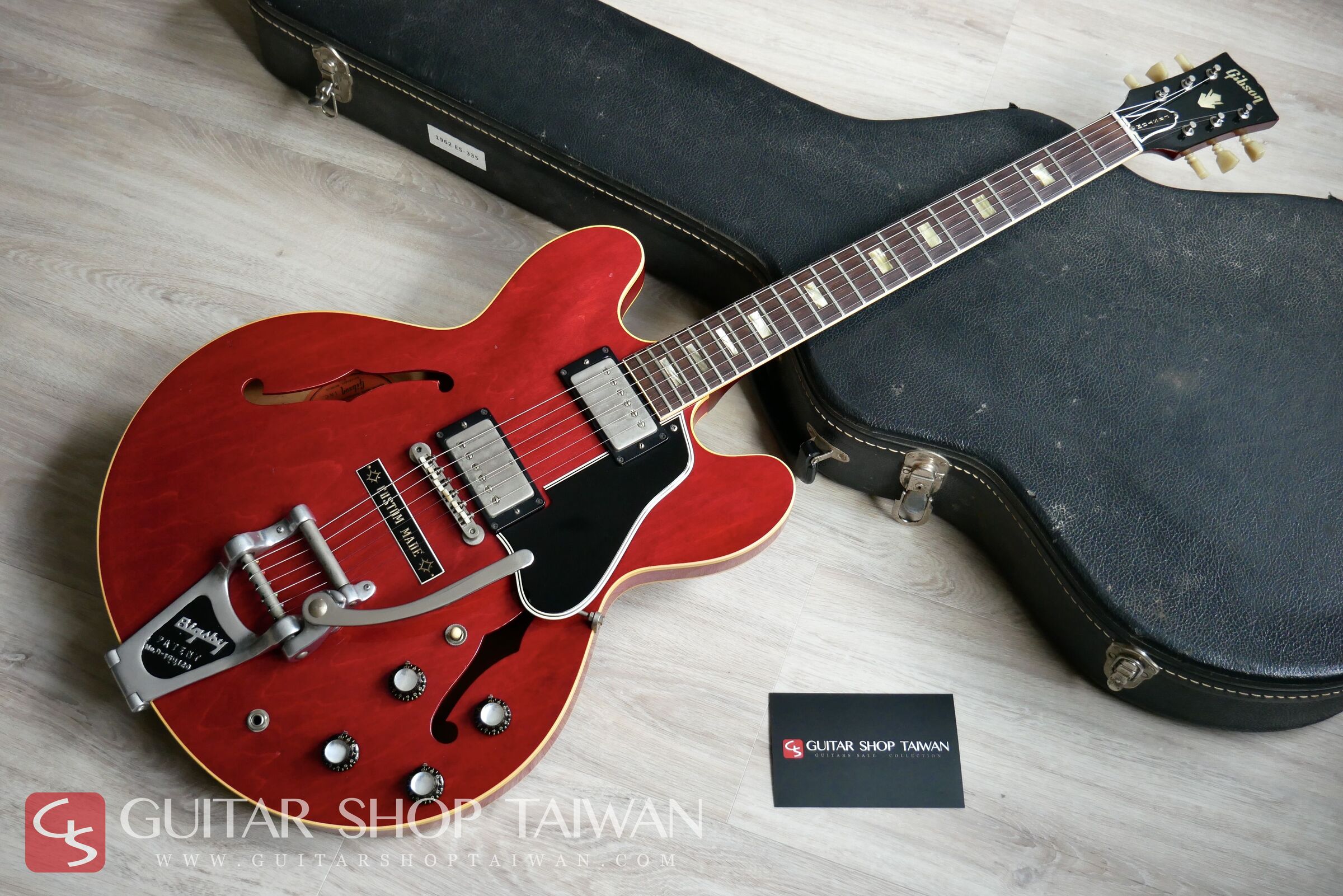
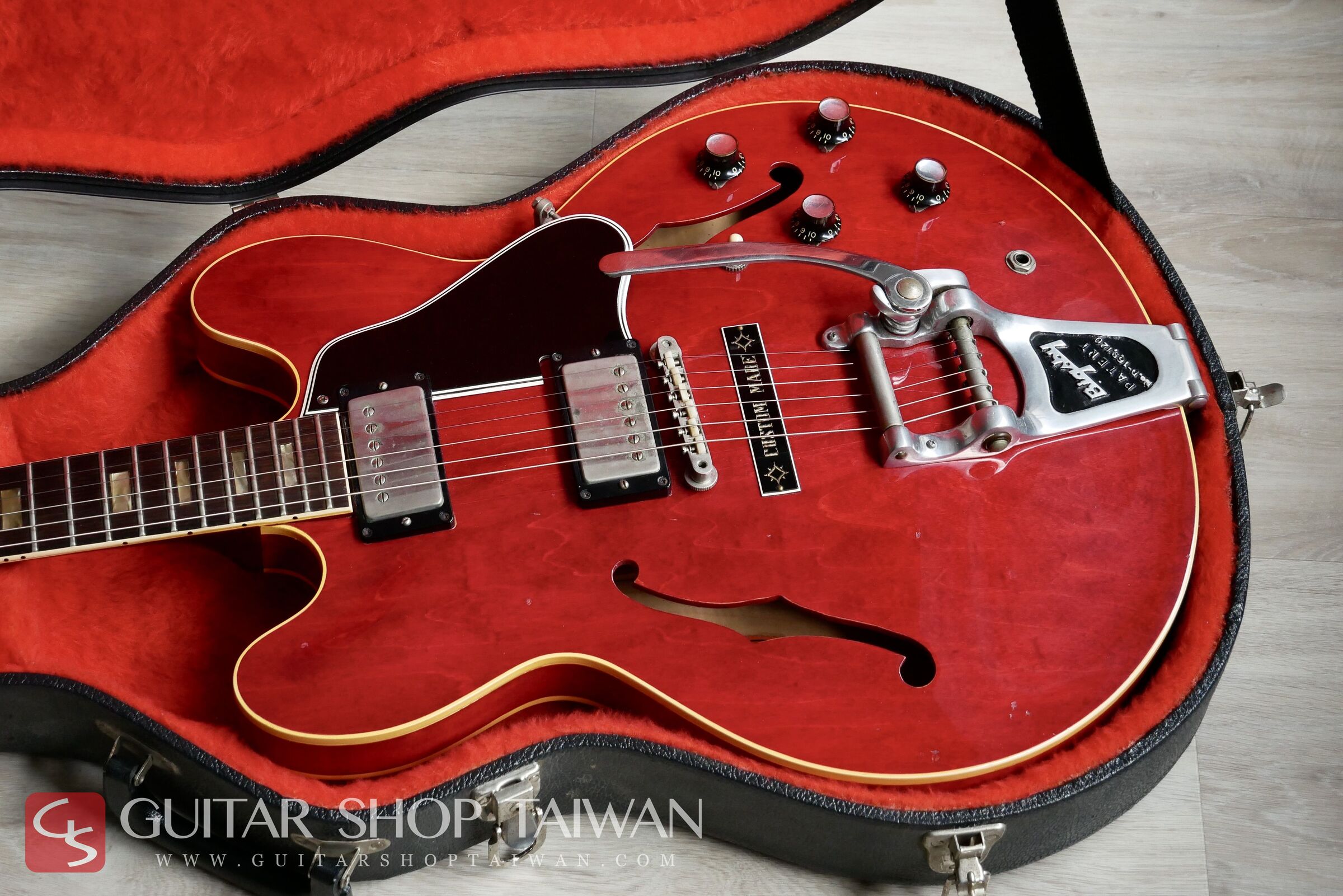
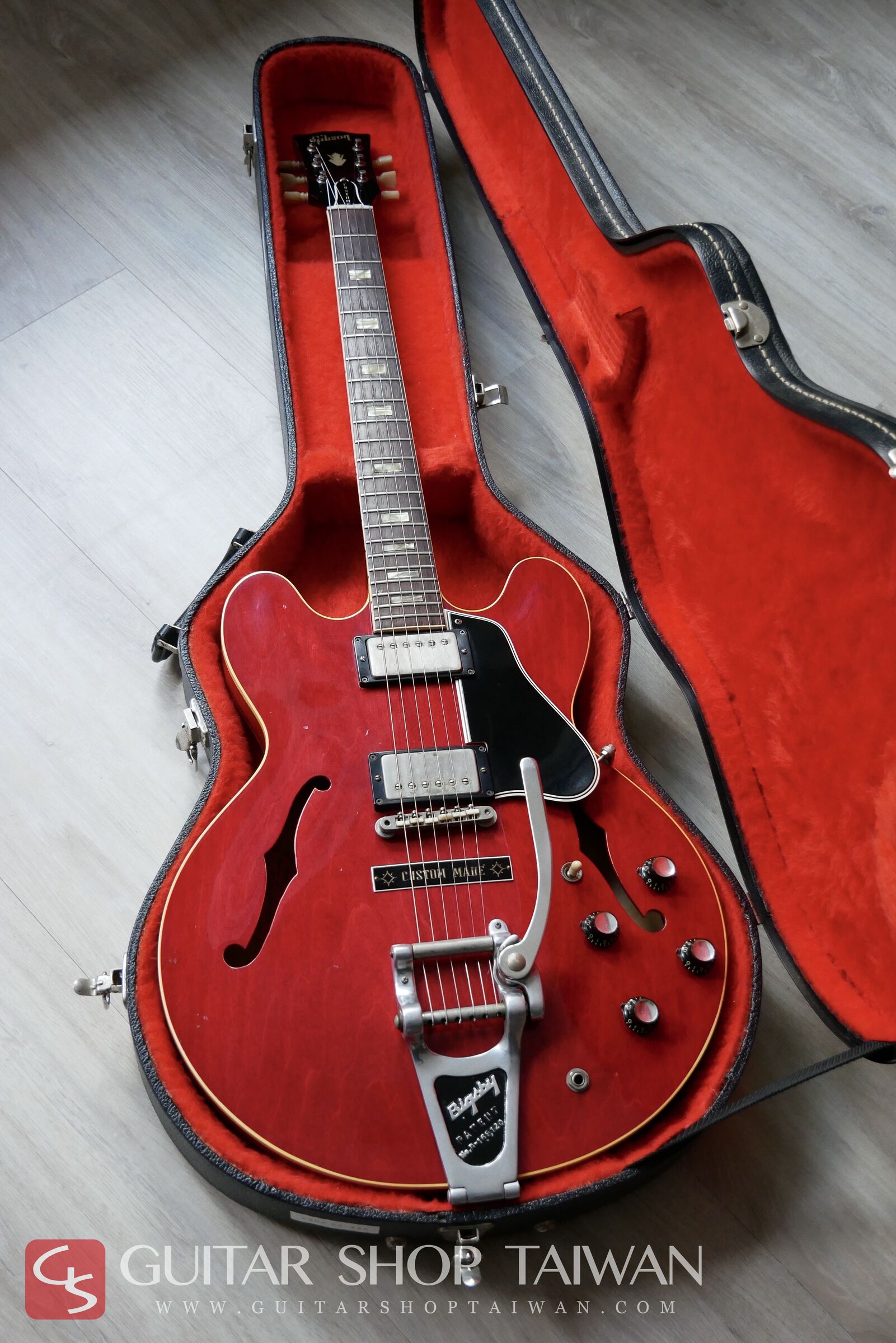
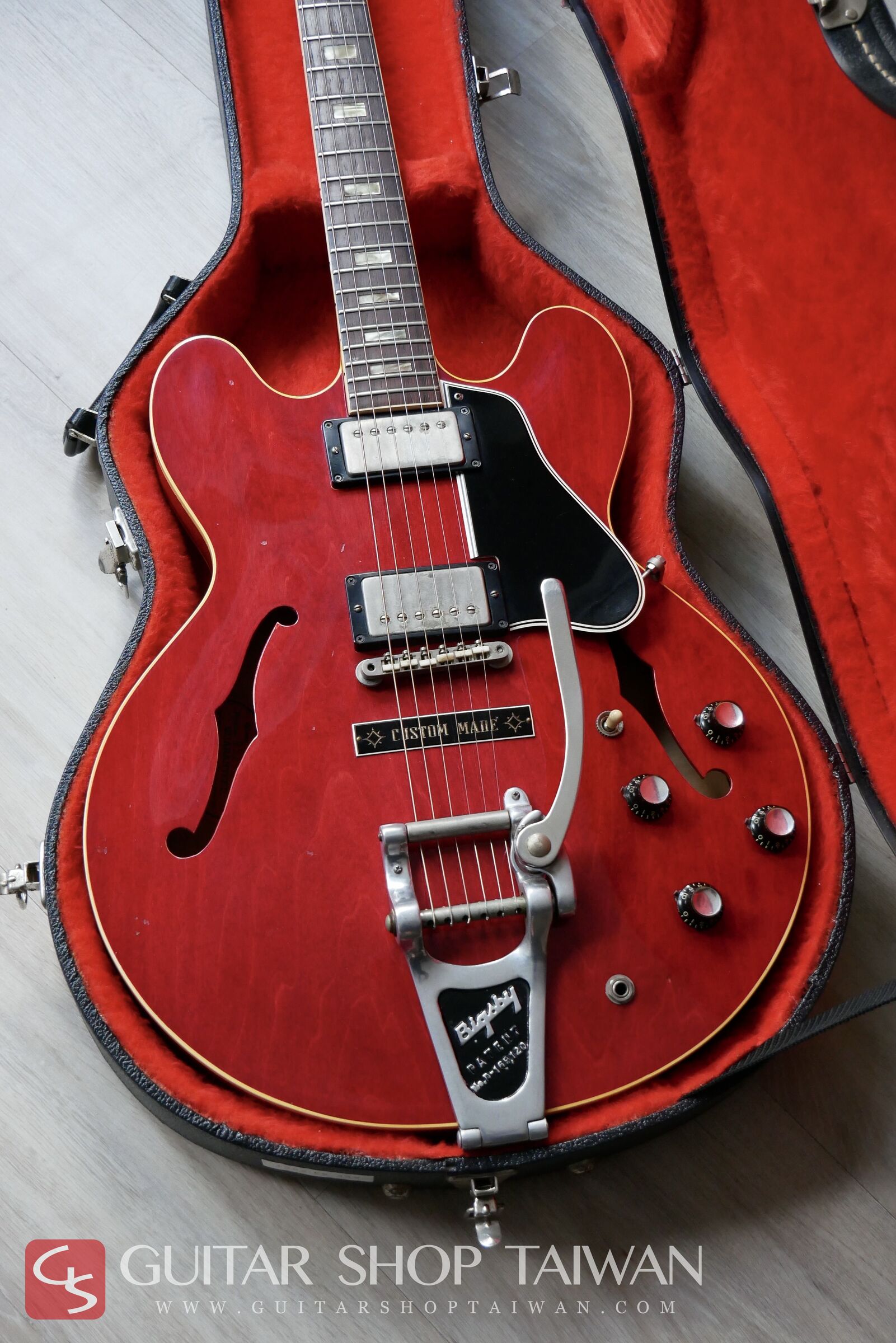
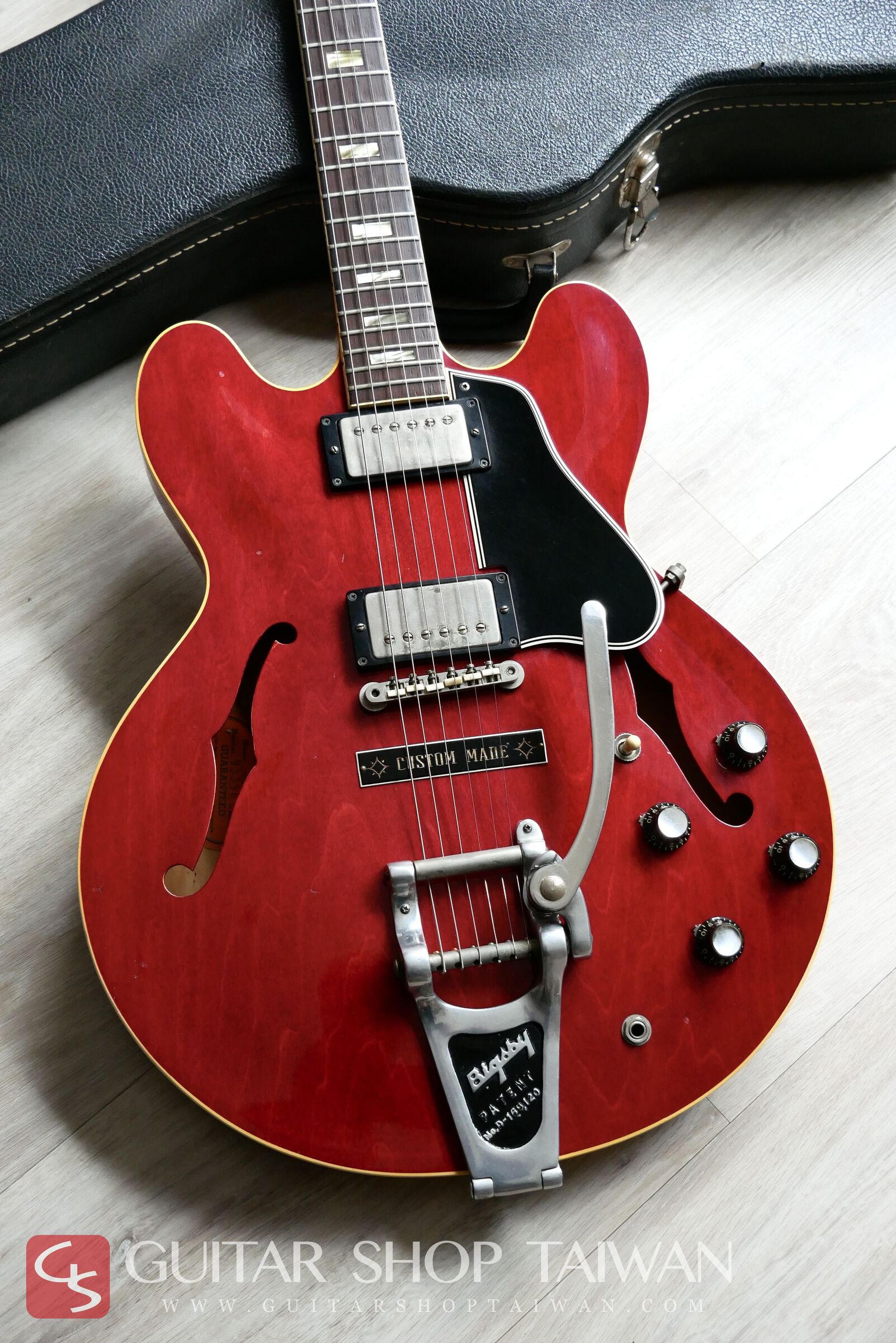
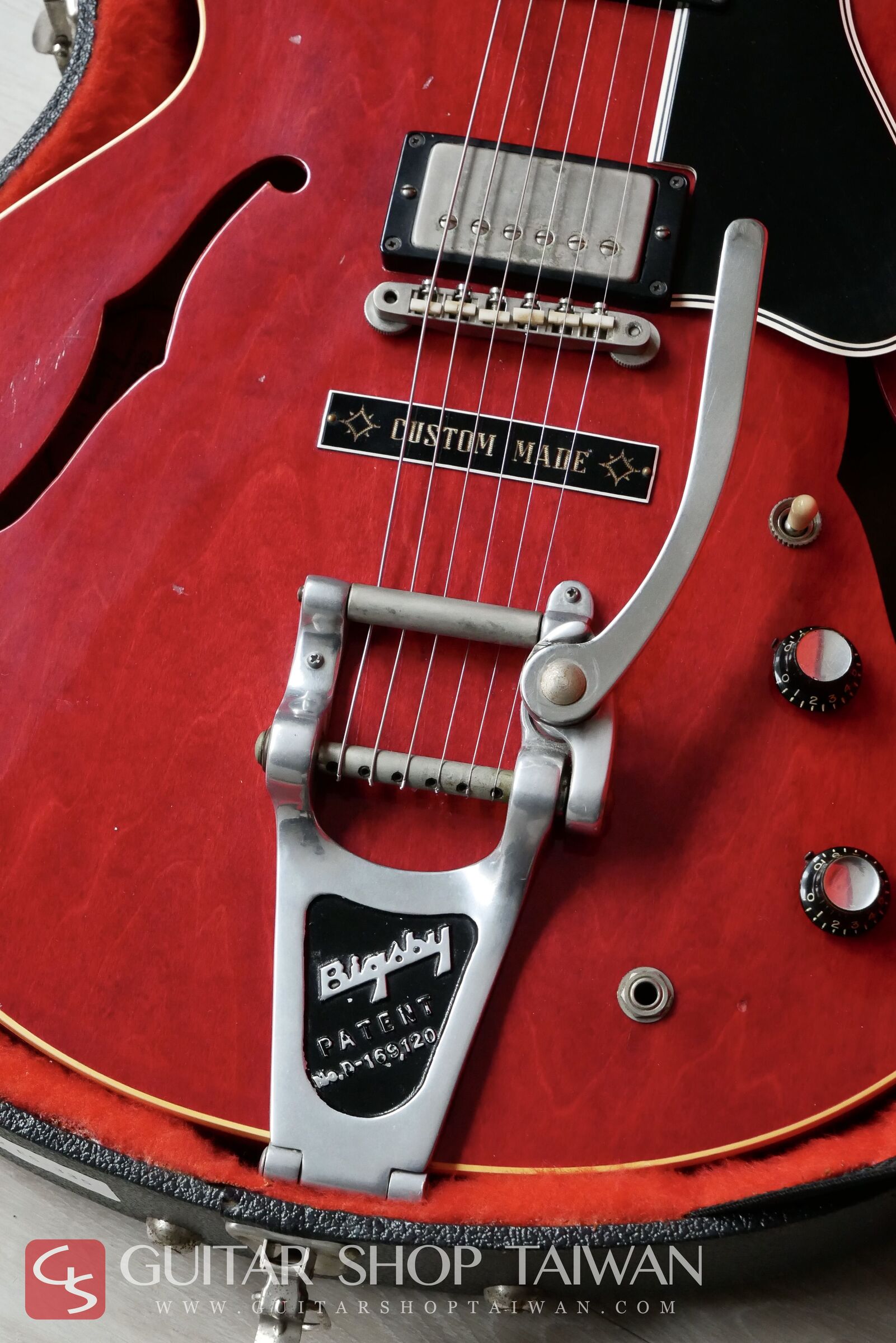
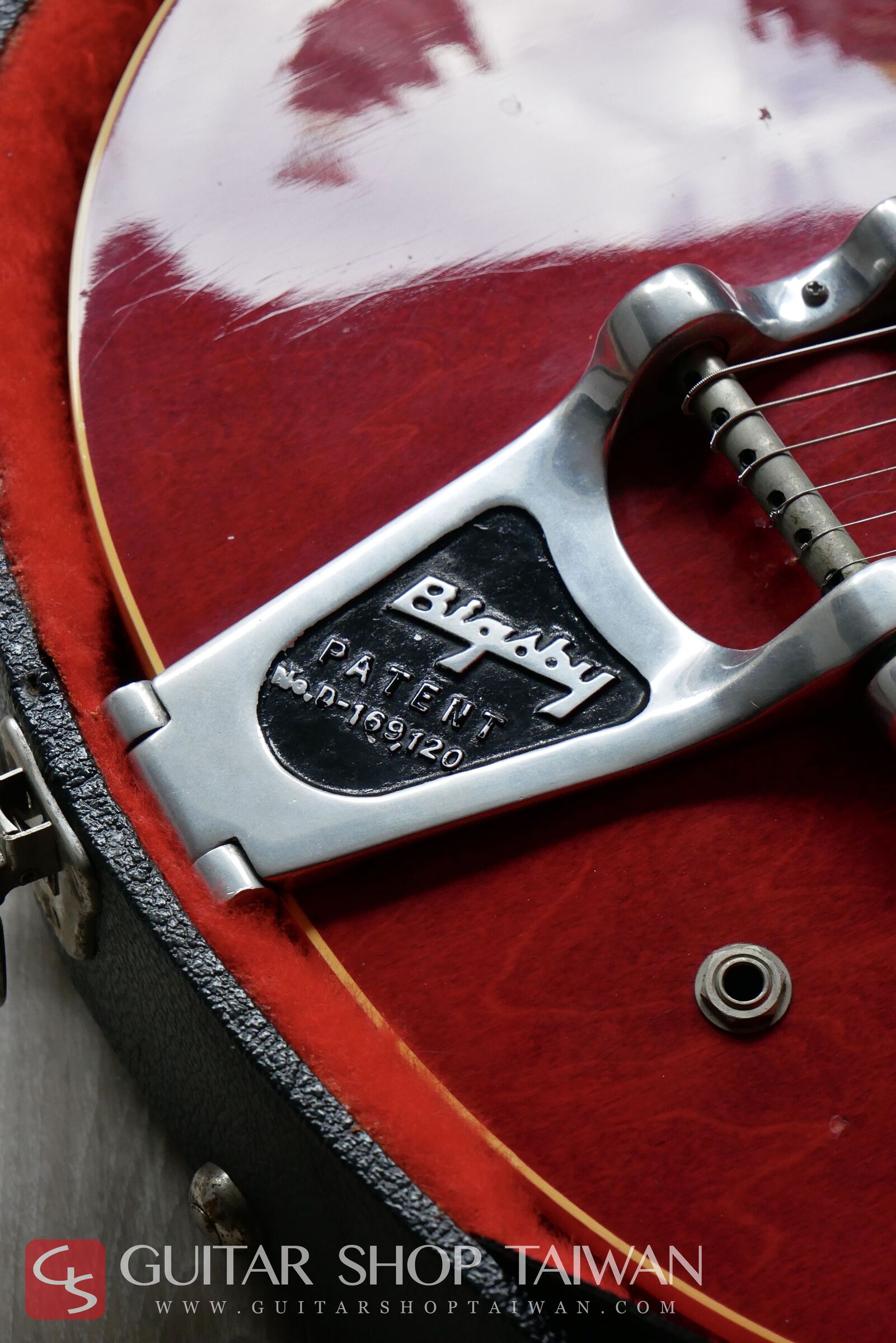
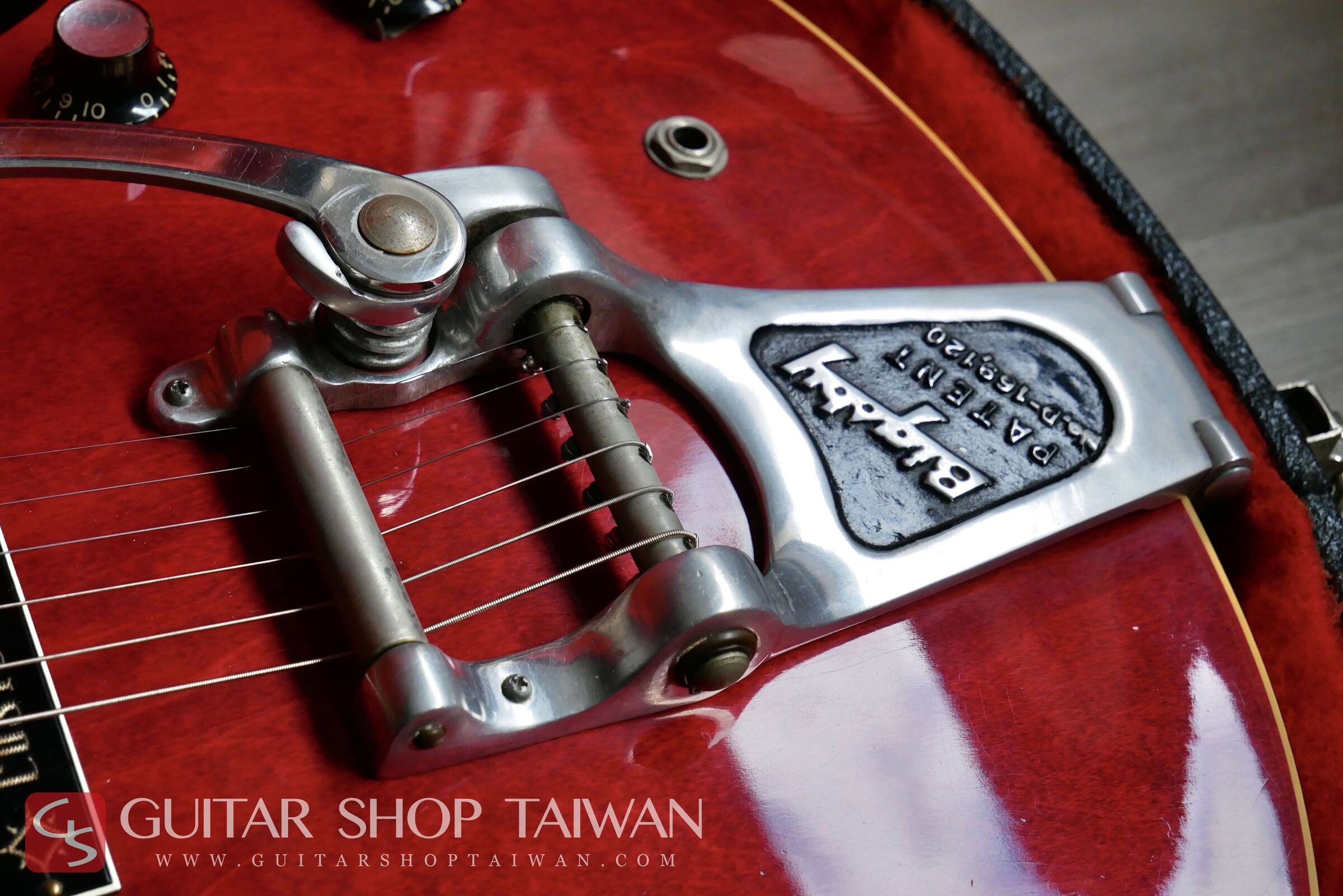
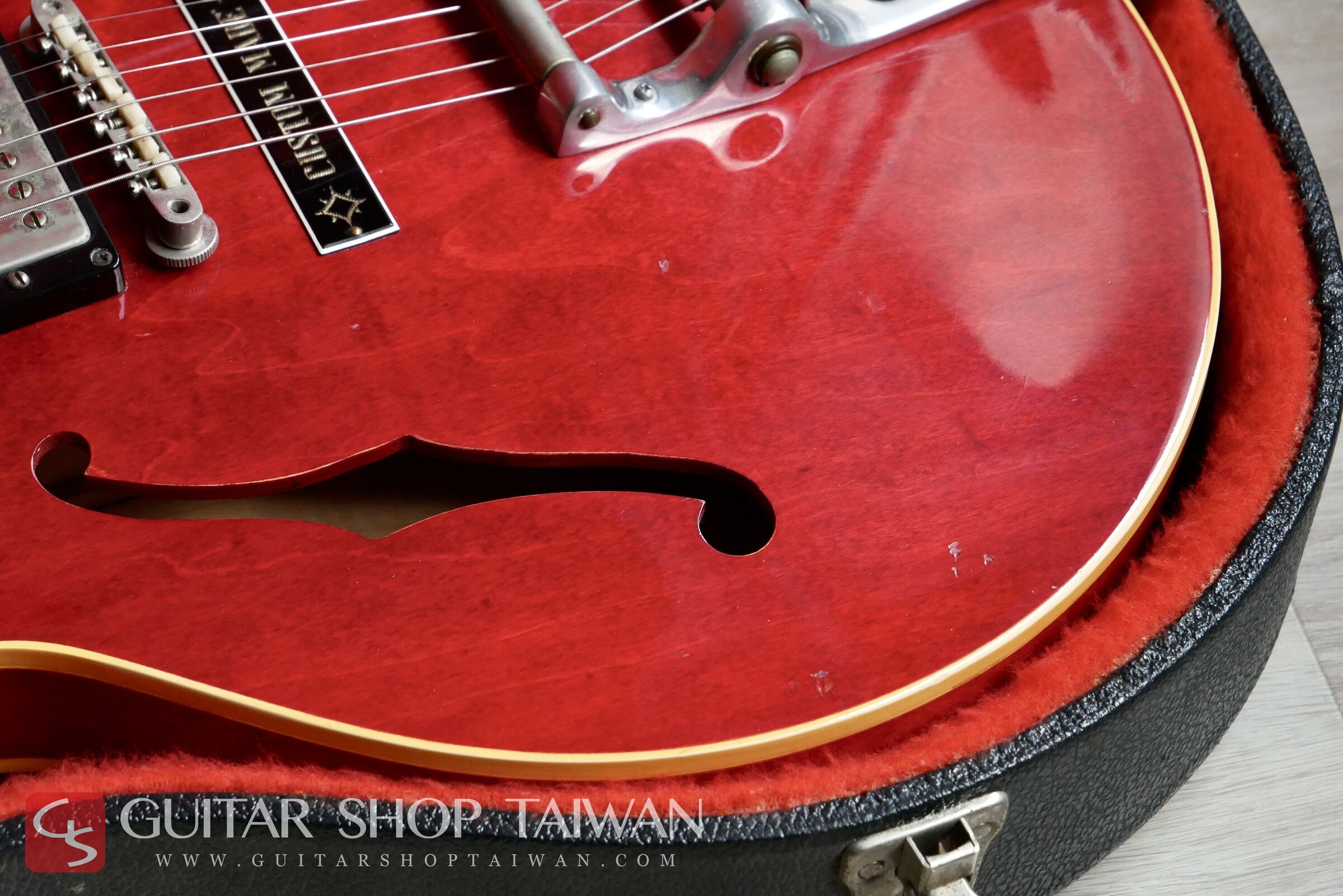
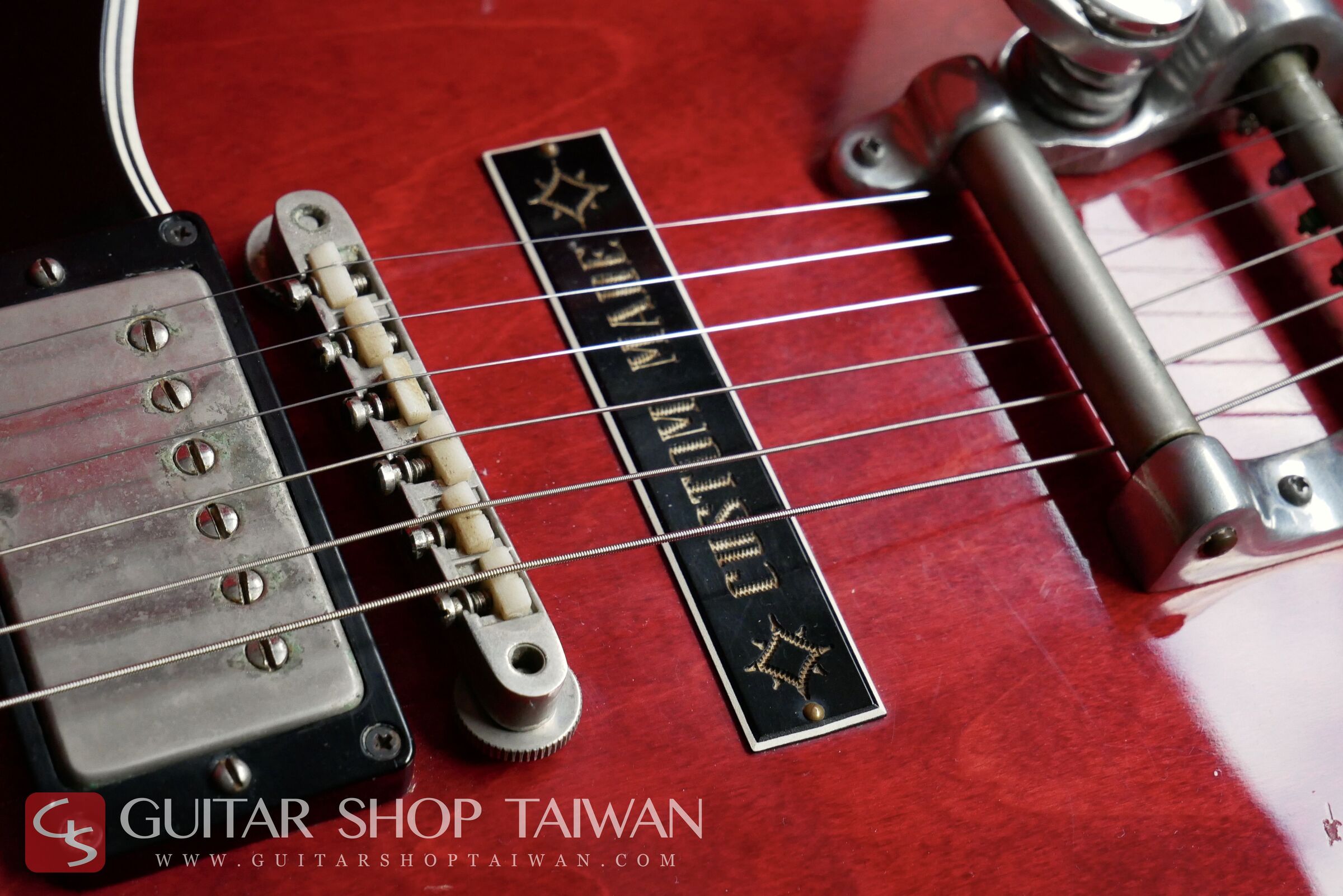
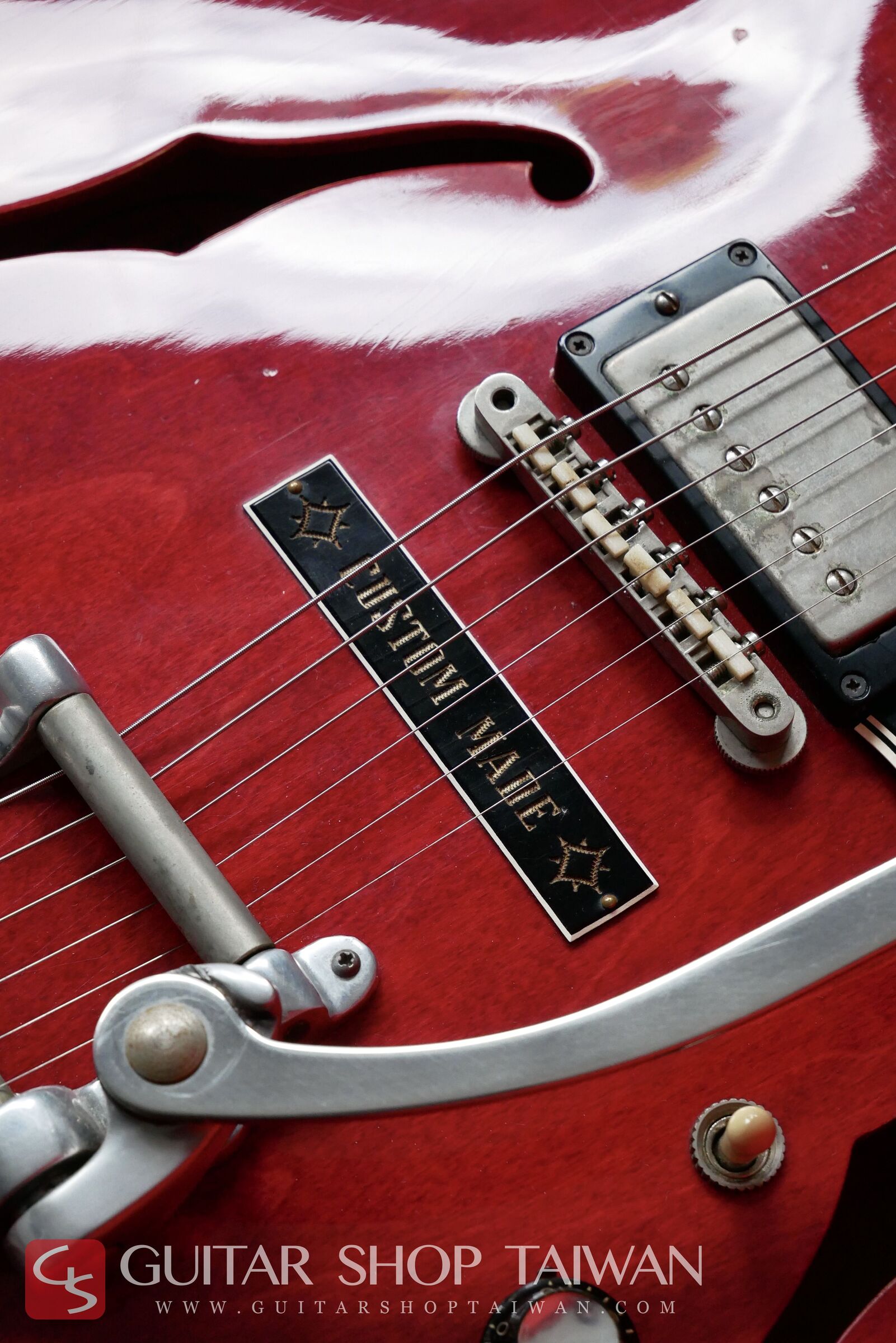
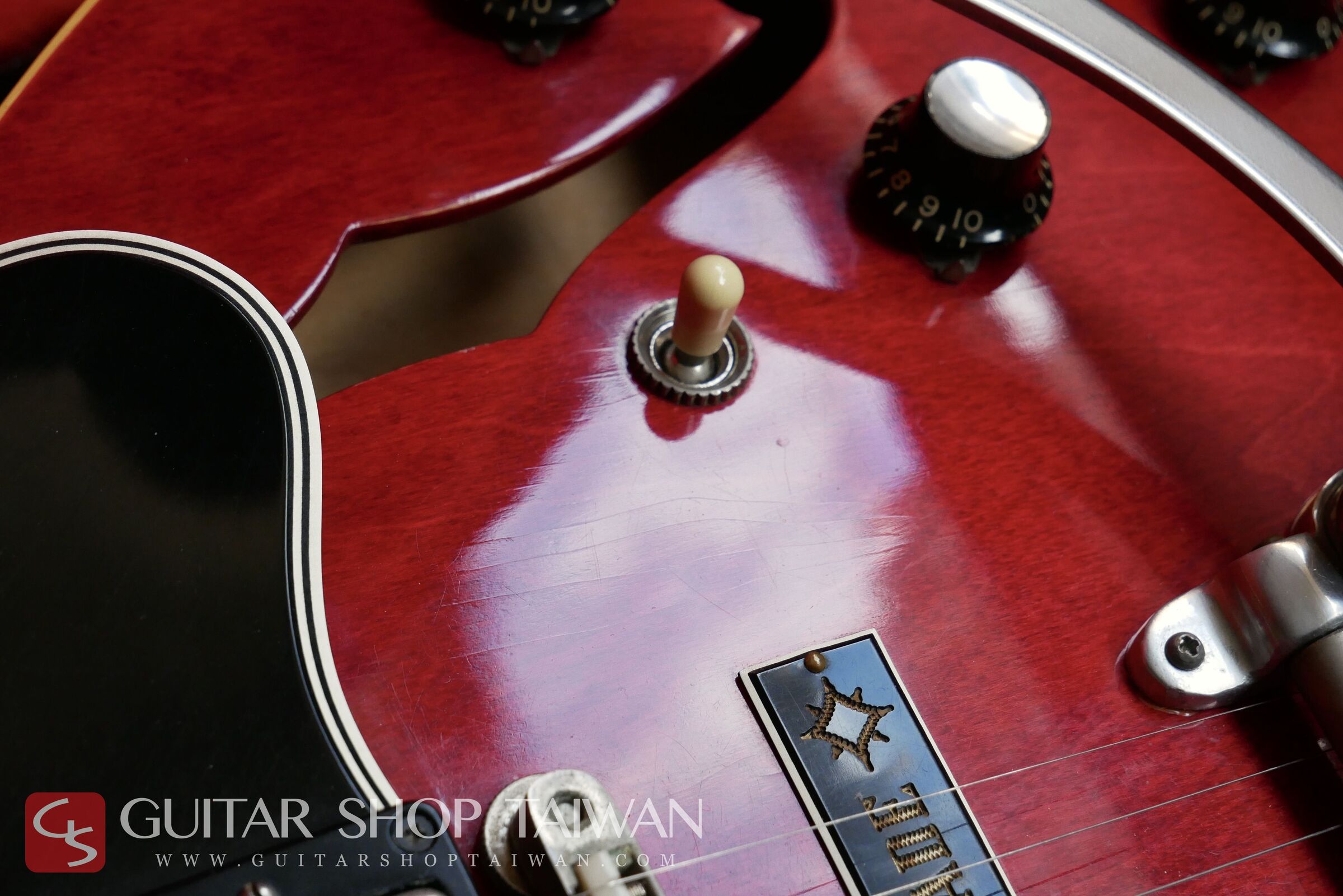
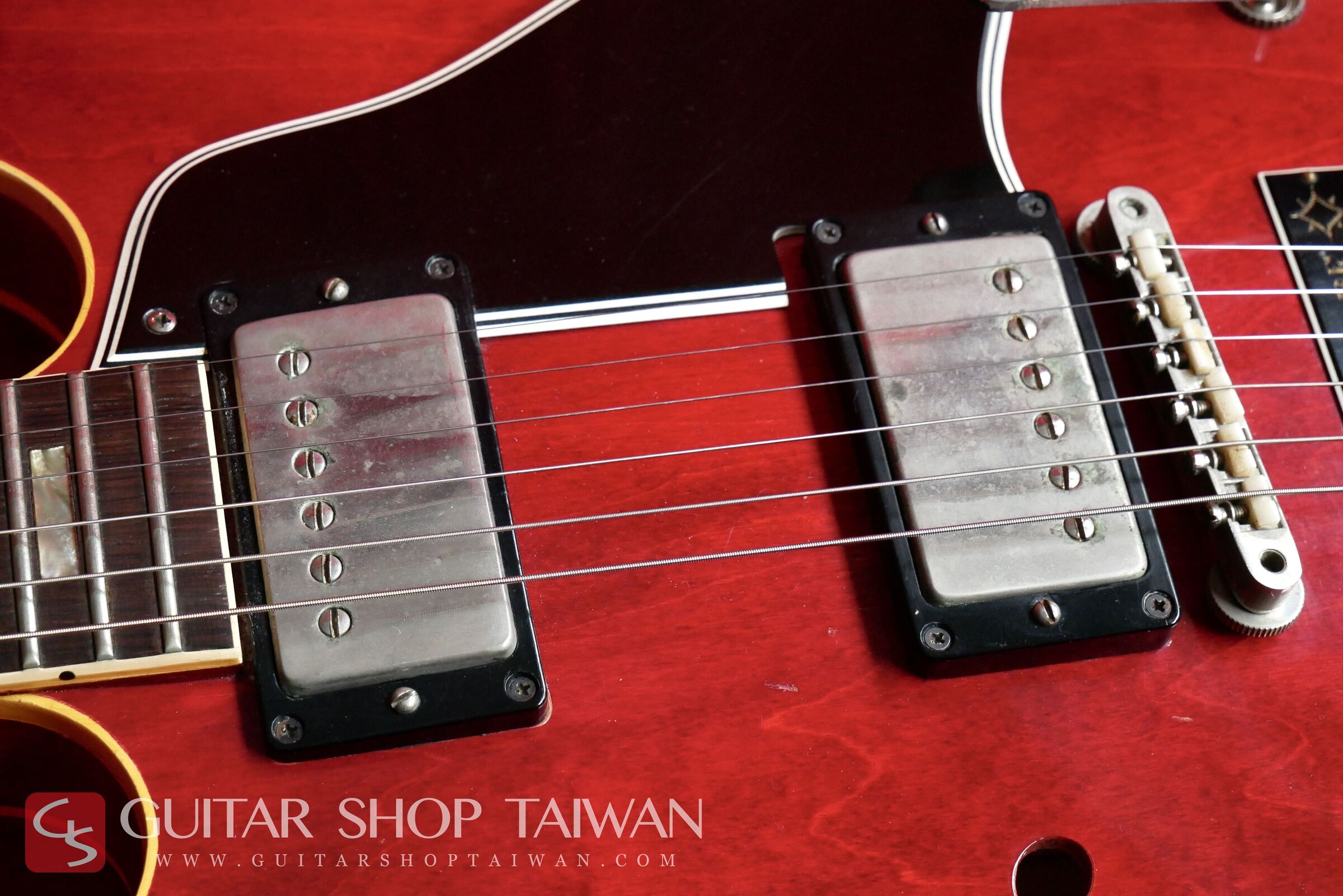
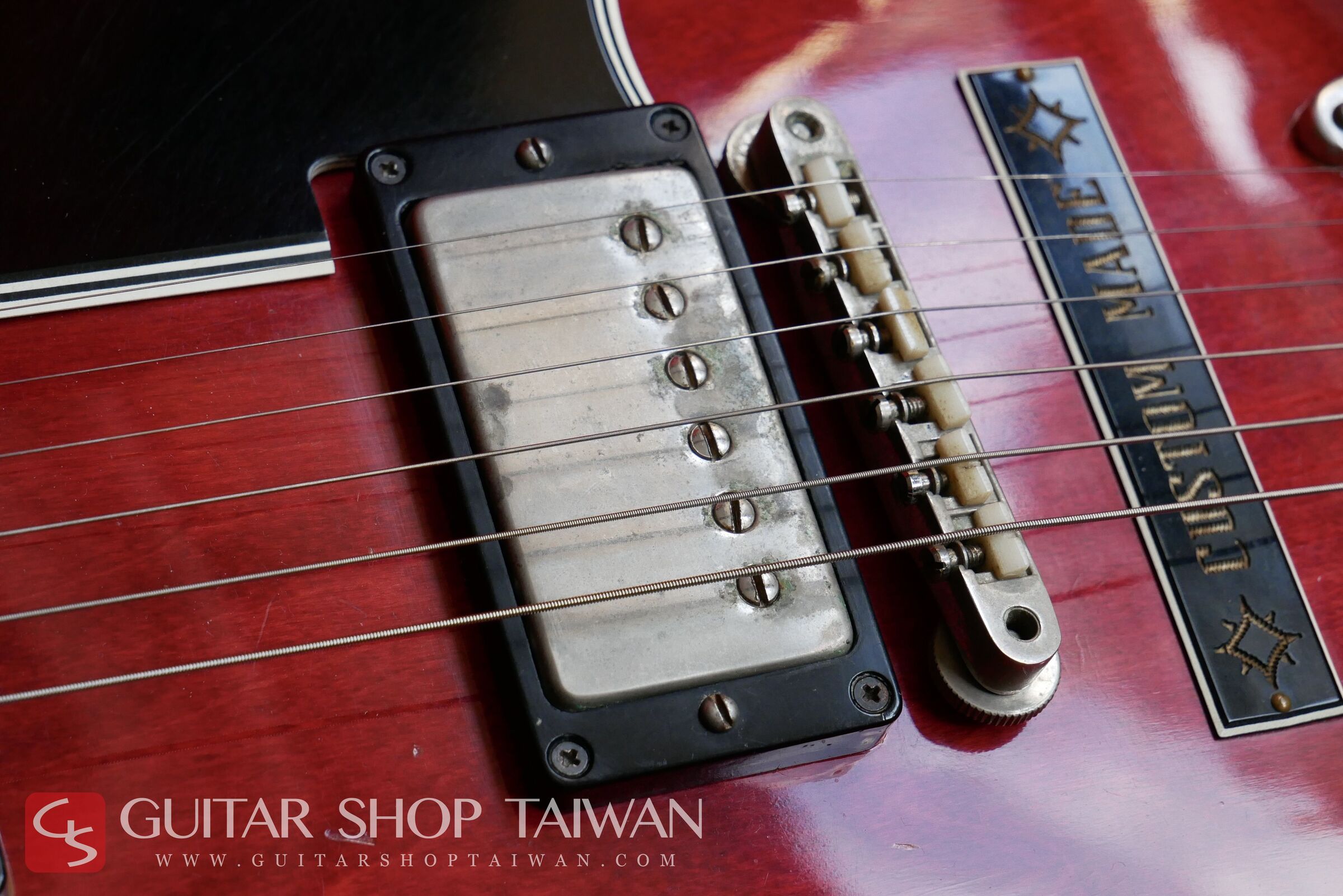
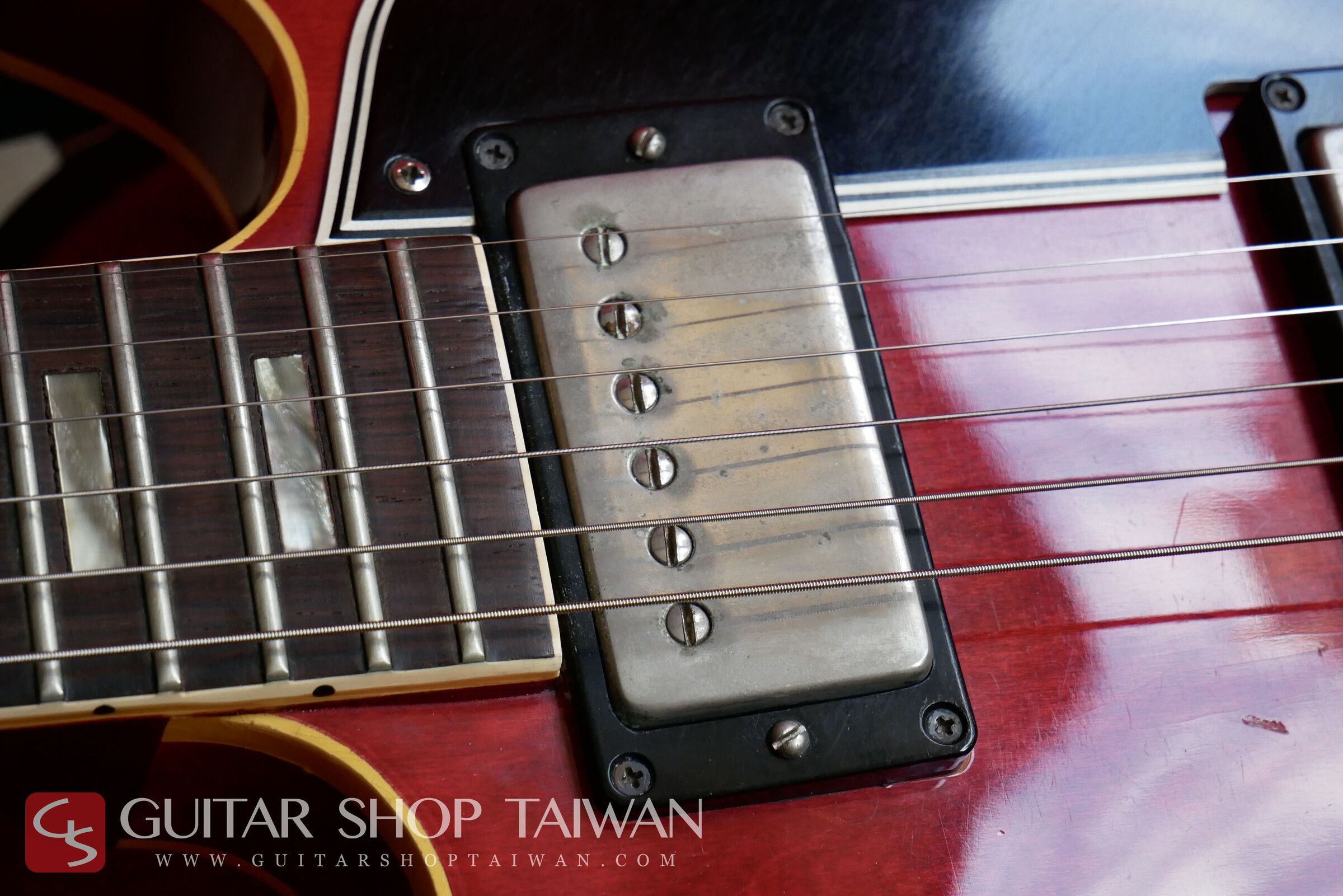
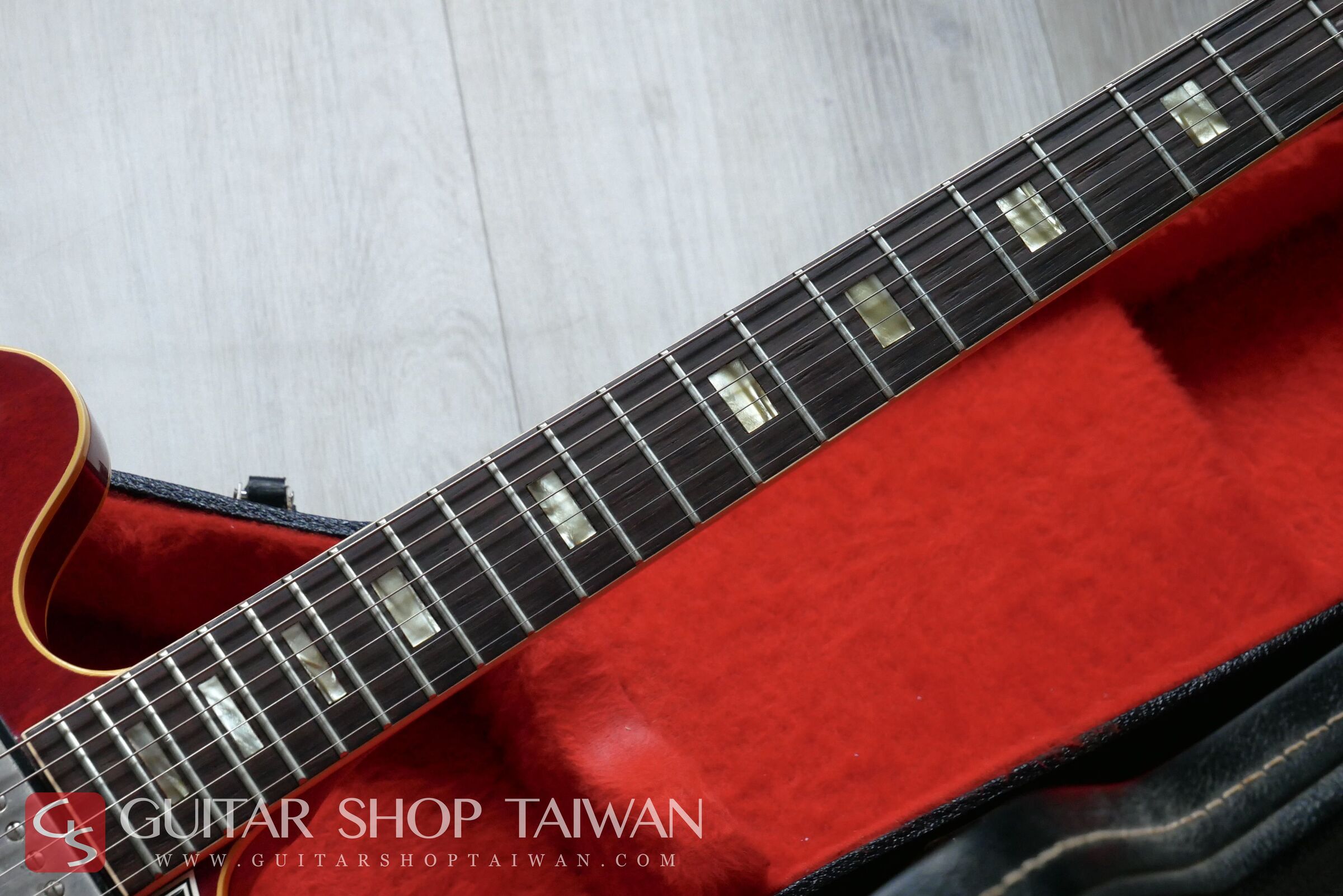
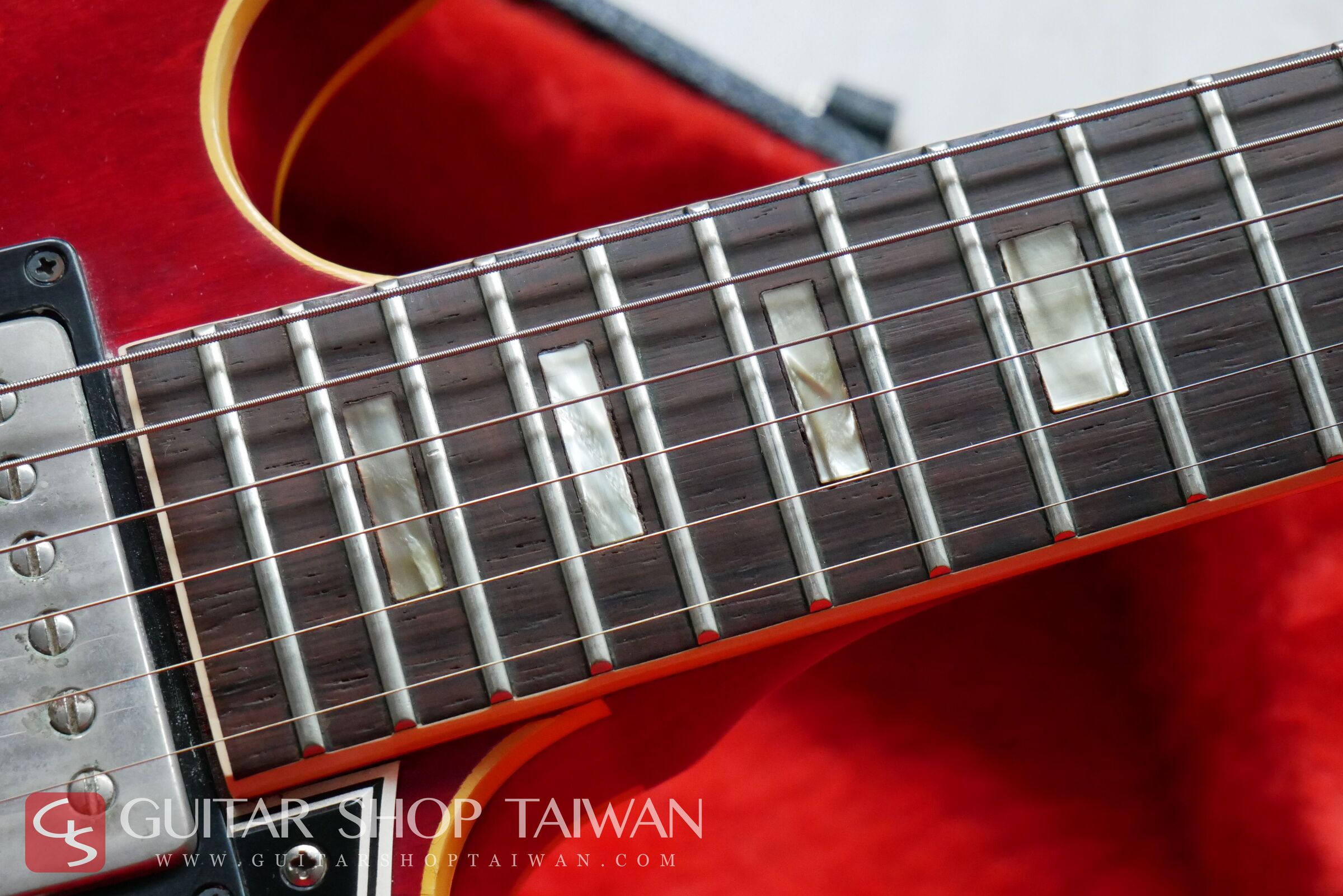
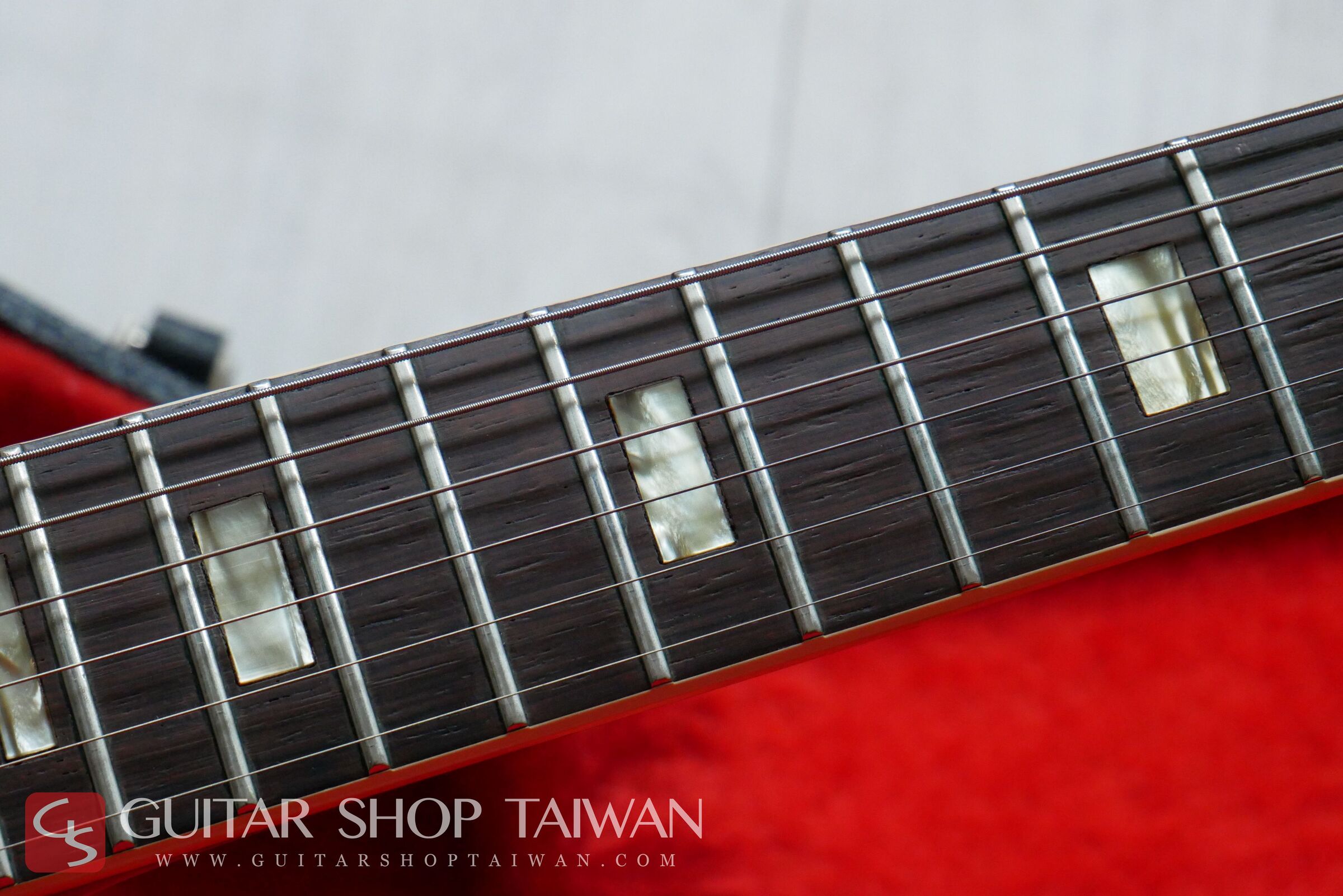
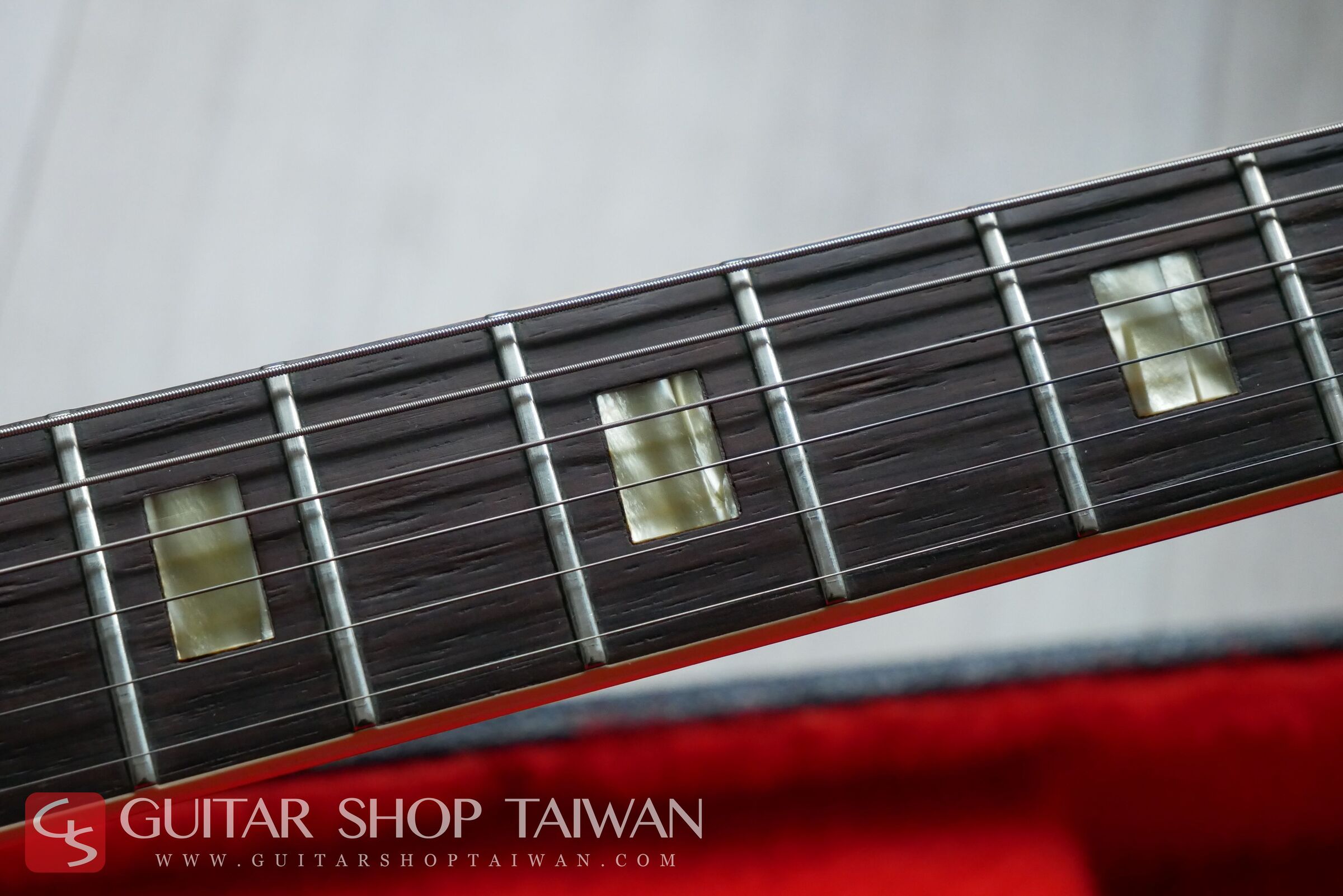
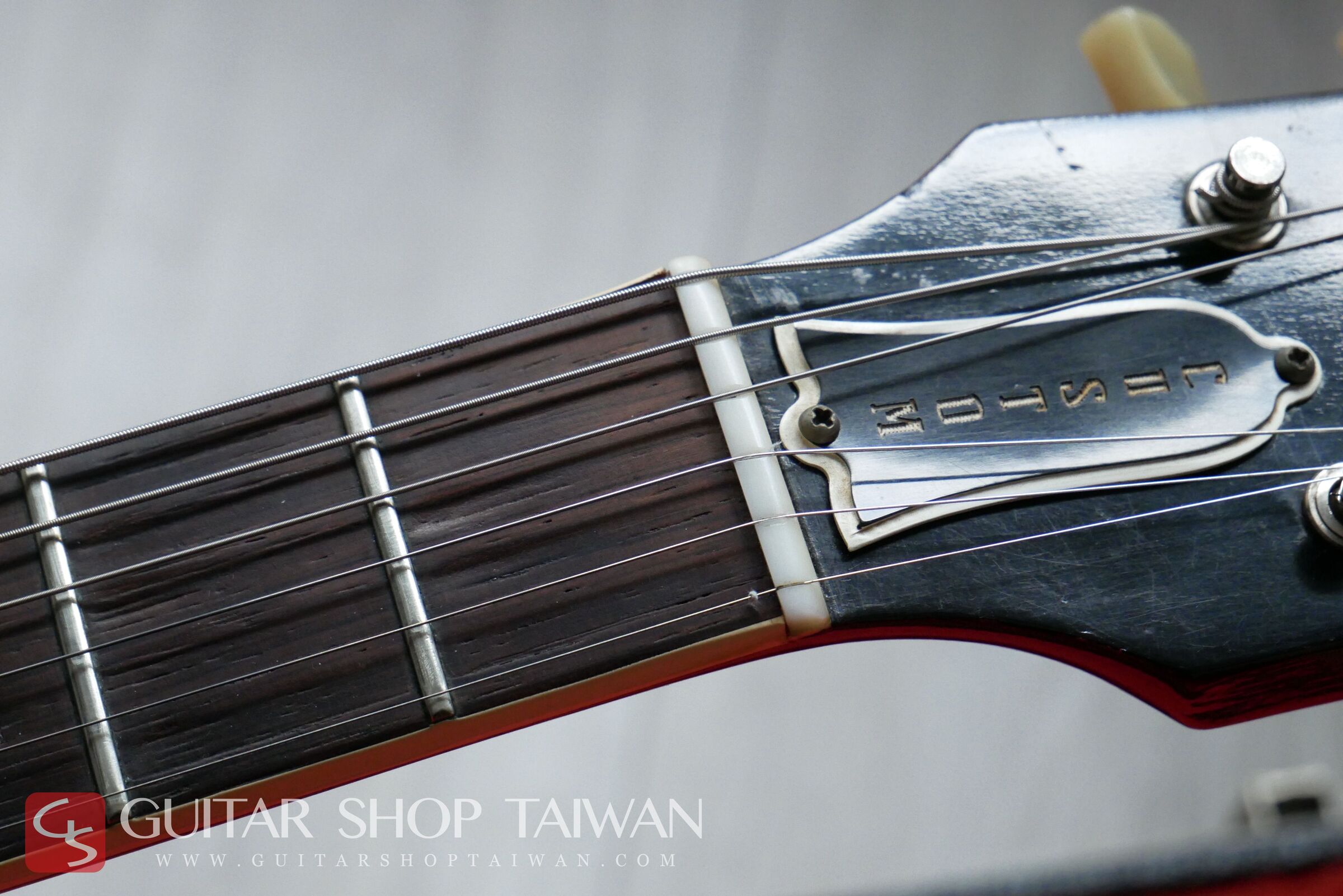
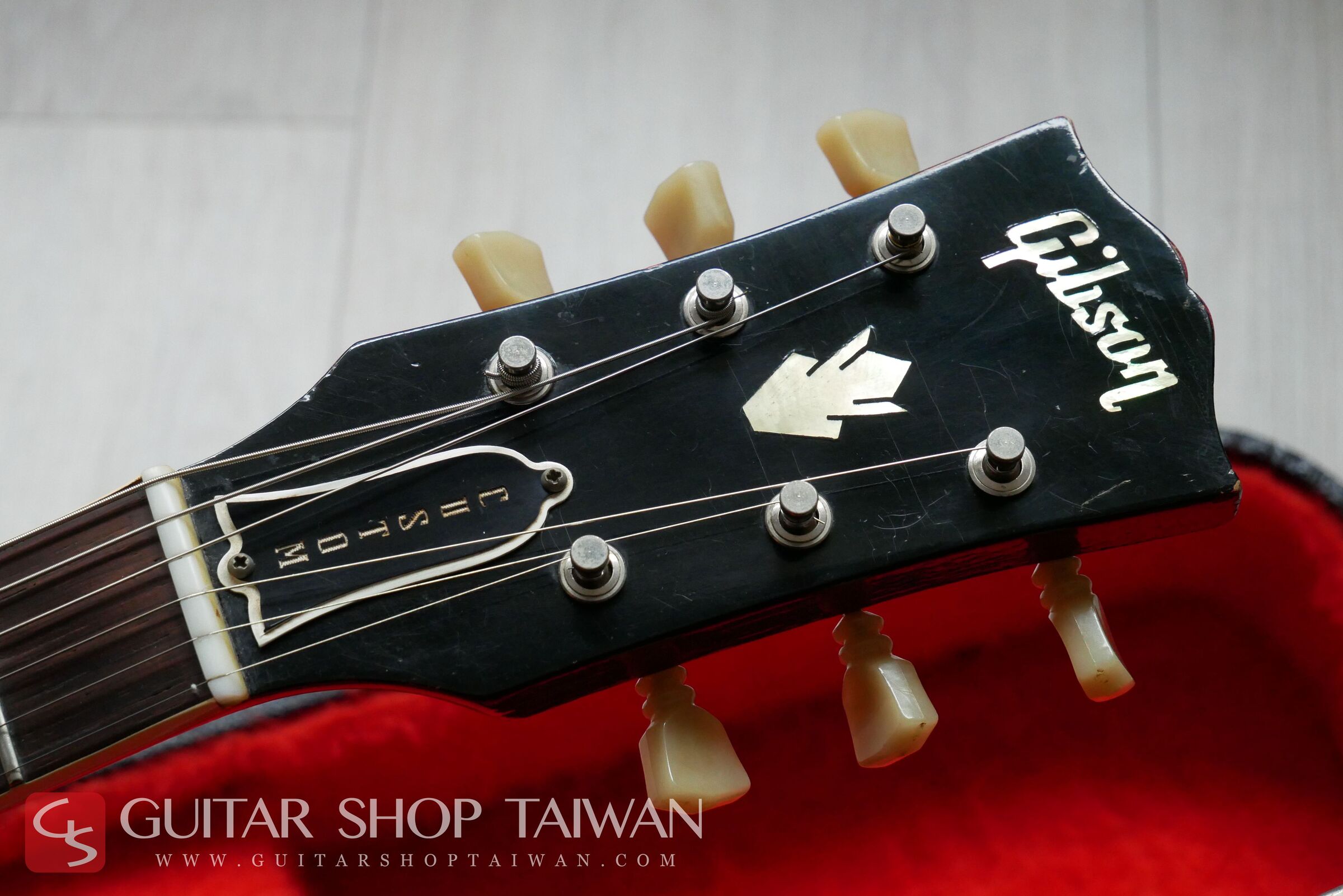
本公司收藏釋出。這是一支具有歷史意義的吉他,真正1962年製造的ES-335,也就是統稱的元年琴。1962年是ES-335的重要過渡時期,有著幾個非常經典的特徵,包括了巴西玫瑰木指板、Small Block Inlays小方塊鑲嵌、一體式桃花心木琴頸、無固定鋼絲的ABR-1,以及一組原始的PAT拾音器,這是1962年的第一代PAT拾音器,構造與1957年至1962年初的PAF拾音器相同,也就是Gibson在1962年中取得拾音器專利後,底部標籤為印有Patent No. 2,737,842專利號的拾音器。而Gibson當年有一個很有意思的生產方式,工廠會將所有的ES-335預先鑽好Stopbar的固定孔,提供給Stopbar與Stopbar兩個版本,而提供給Bigsby版本的ES-335琴面就會有Custom Made字樣的金屬牌用於遮住Stopbar固定孔,這是當年原廠Bigsby版本相當重要的辨識特徵。
ES-335的基本音色比全實心的吉他更加自然,但又少了全空心吉他那種過於混濁的共鳴,中央的實心楓木塊設計使吉他在高音量時有效抑制回授,中頻突出、音色清晰不尖銳,音域也相當廣泛,而整整六十年以上樹齡的木材,使得鋼弦與琴身完美共振,擁有特別乾爽又空靈的音色,動態非比尋常,與現代復刻琴截然不同的音色。
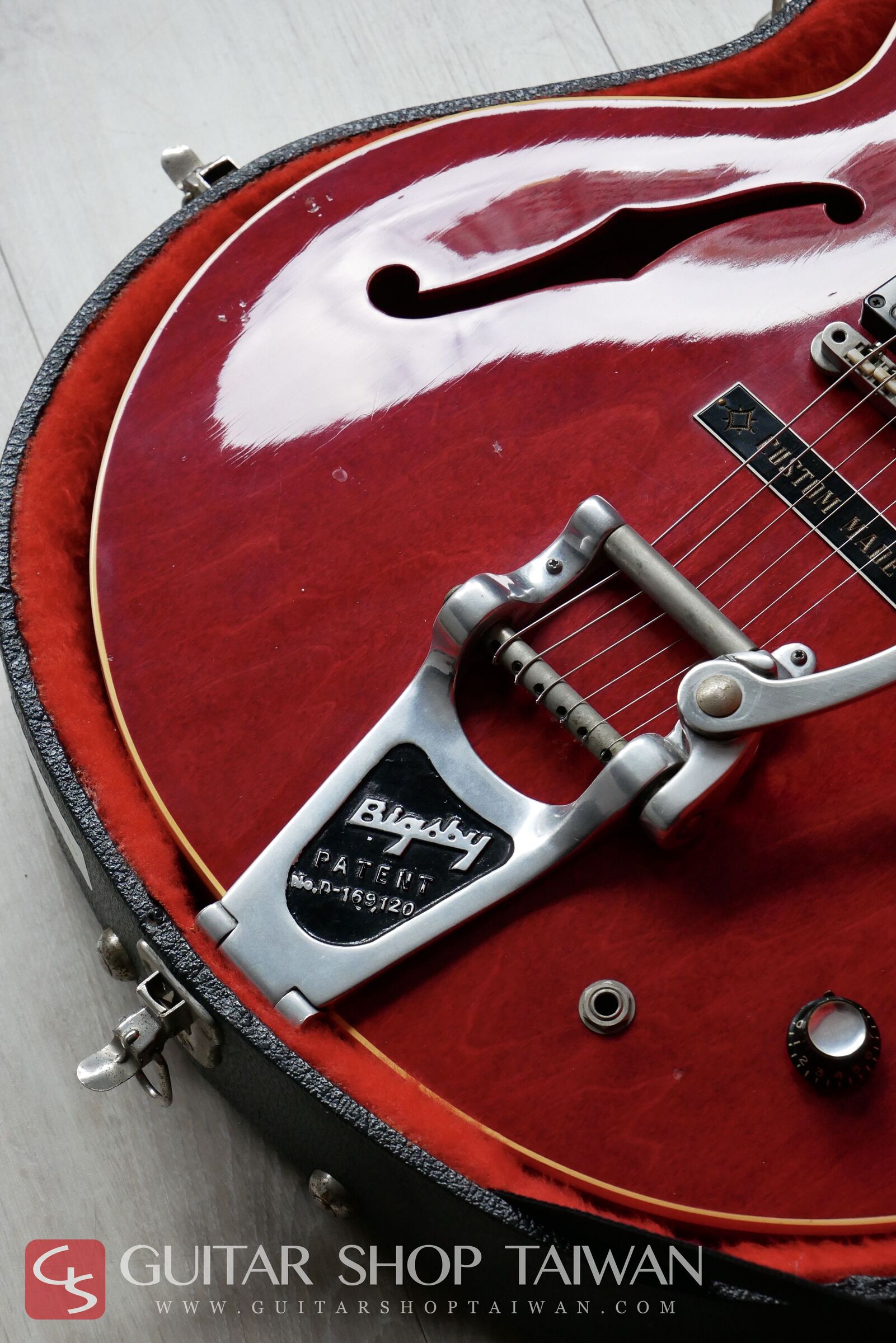
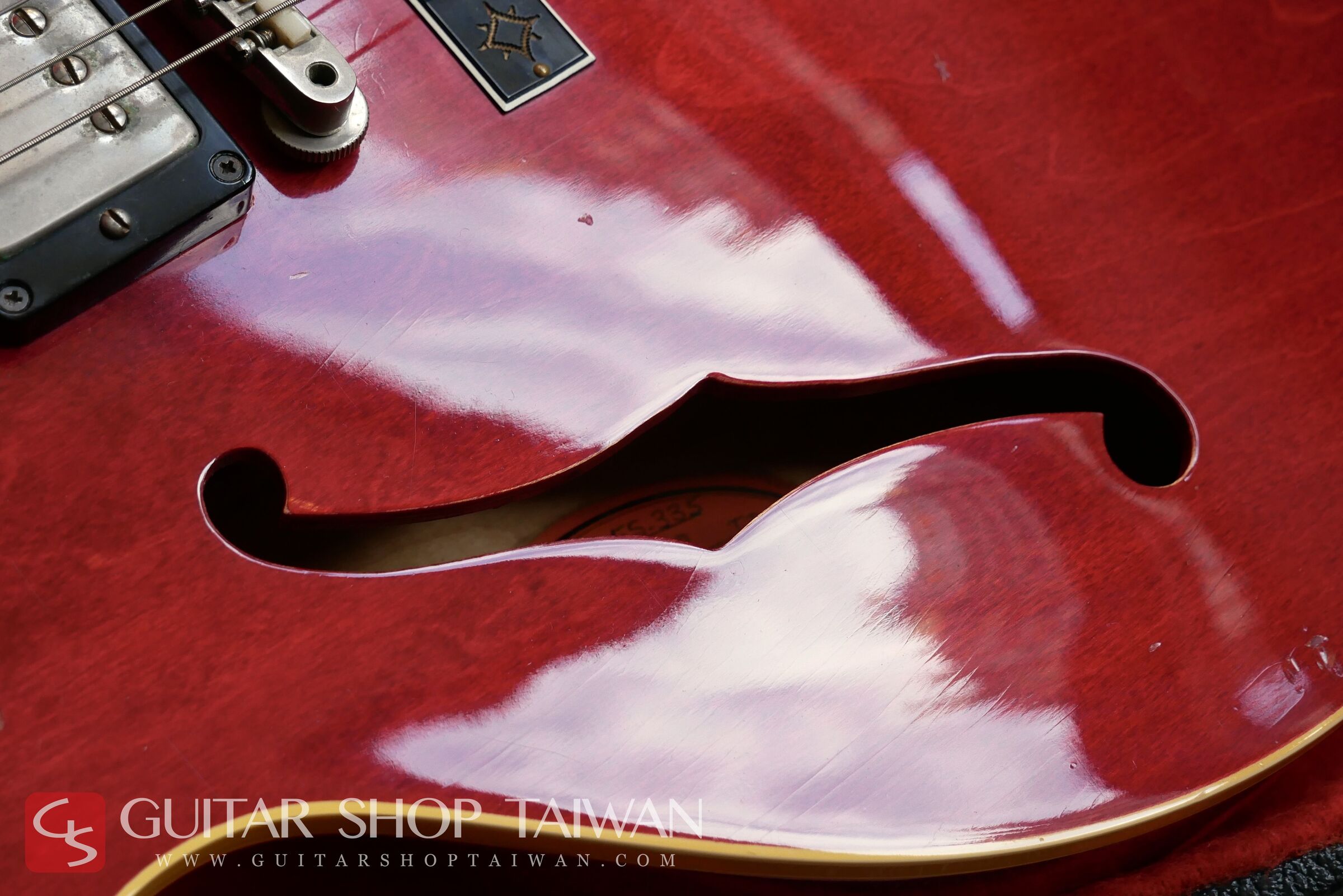
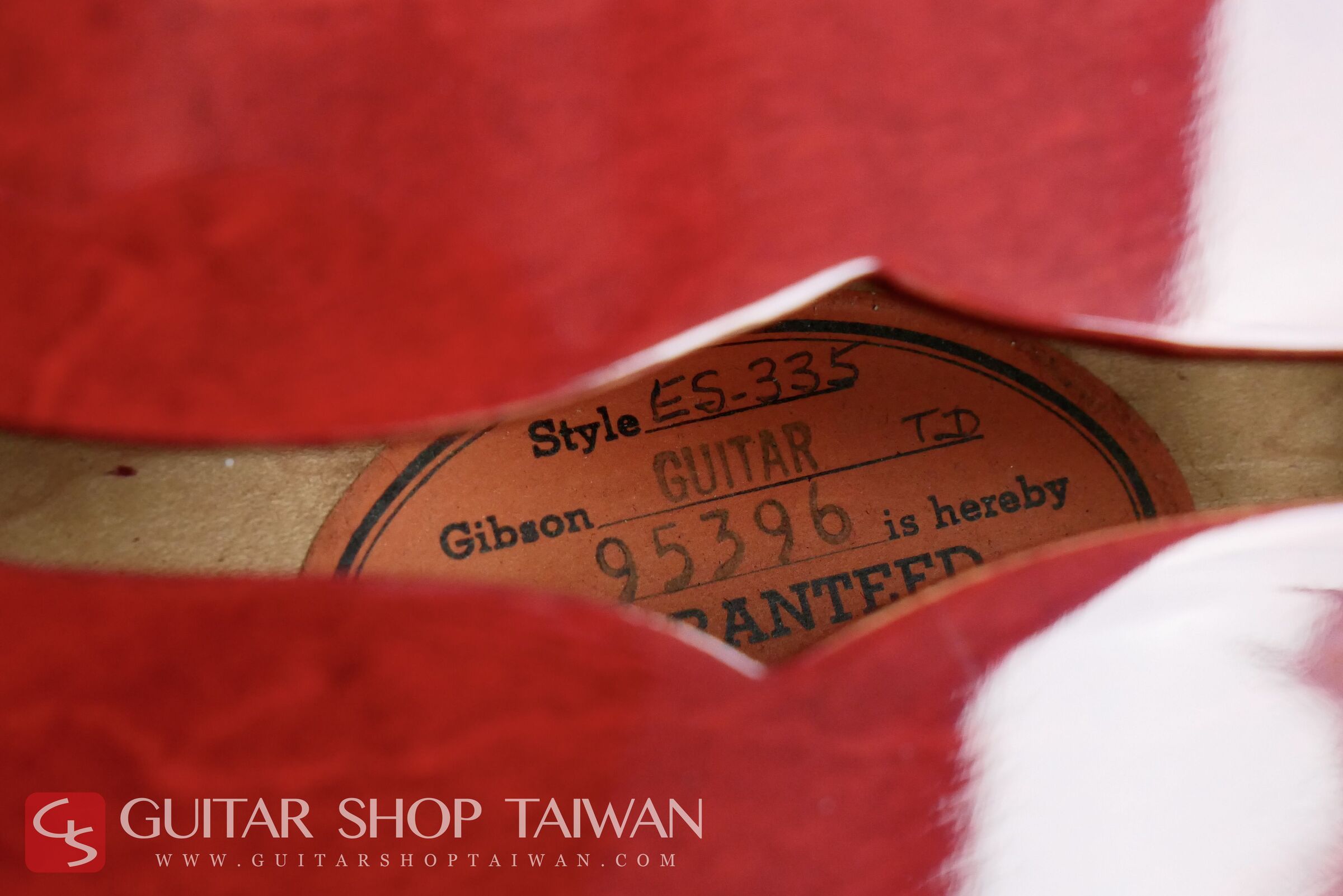
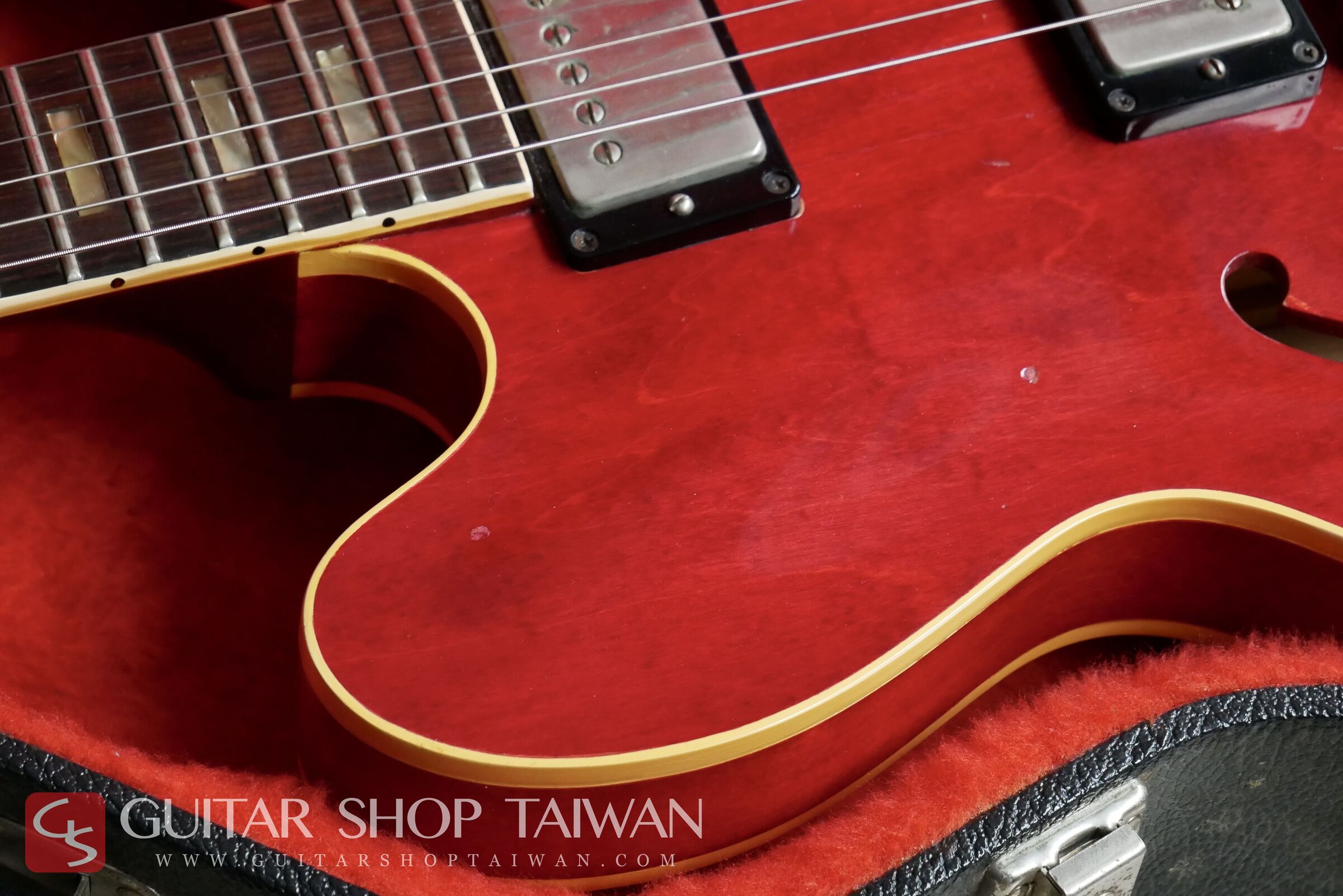
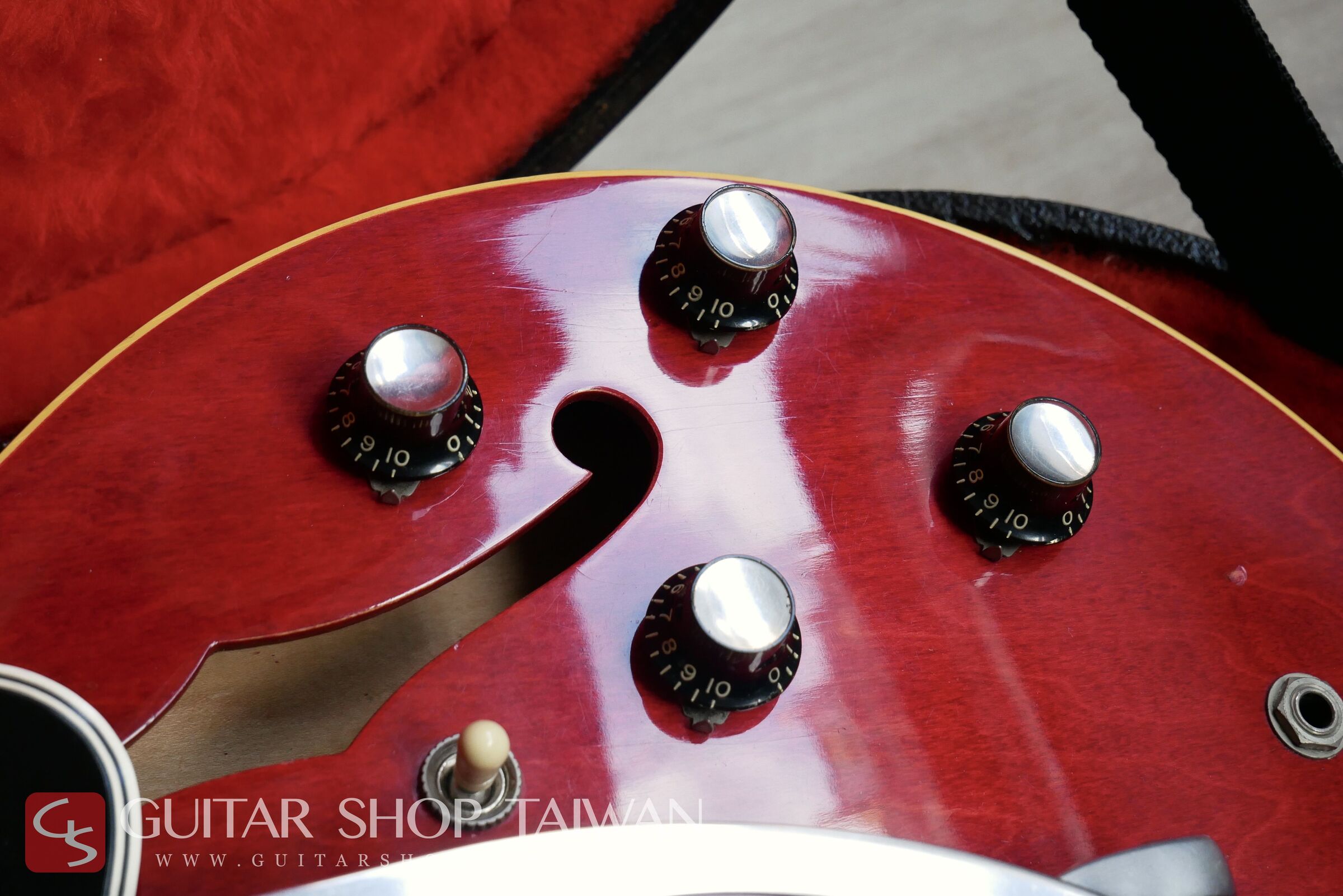
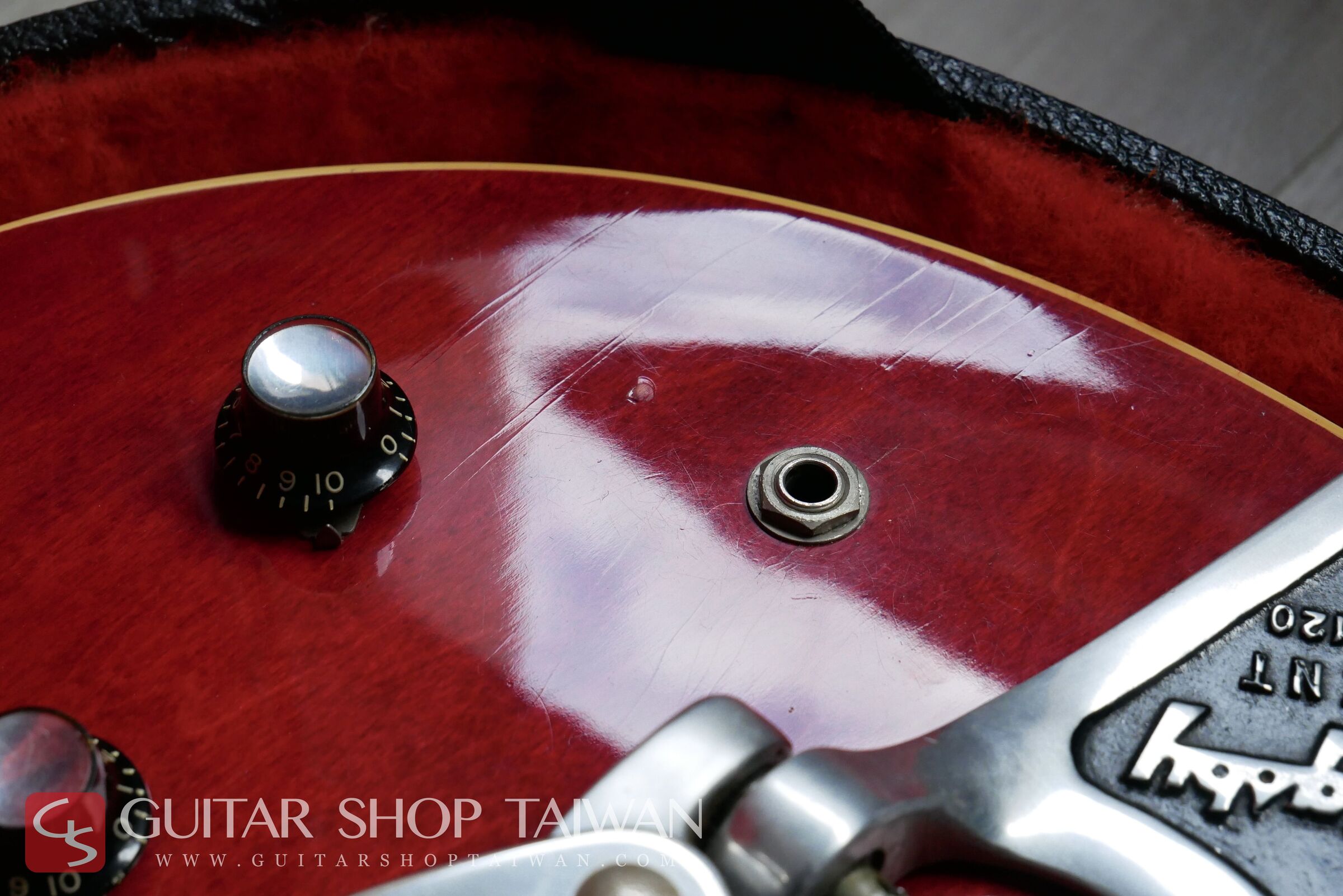
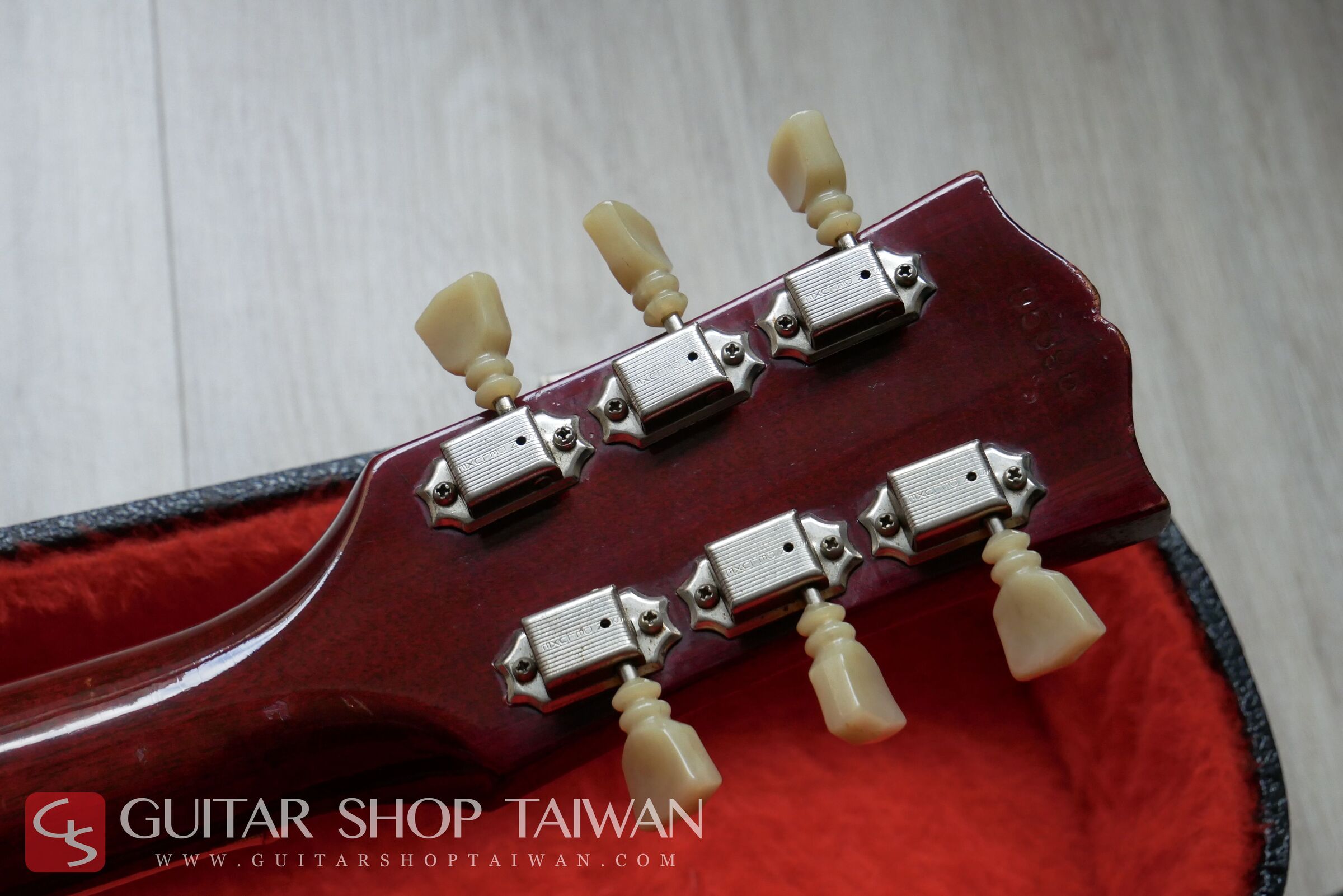
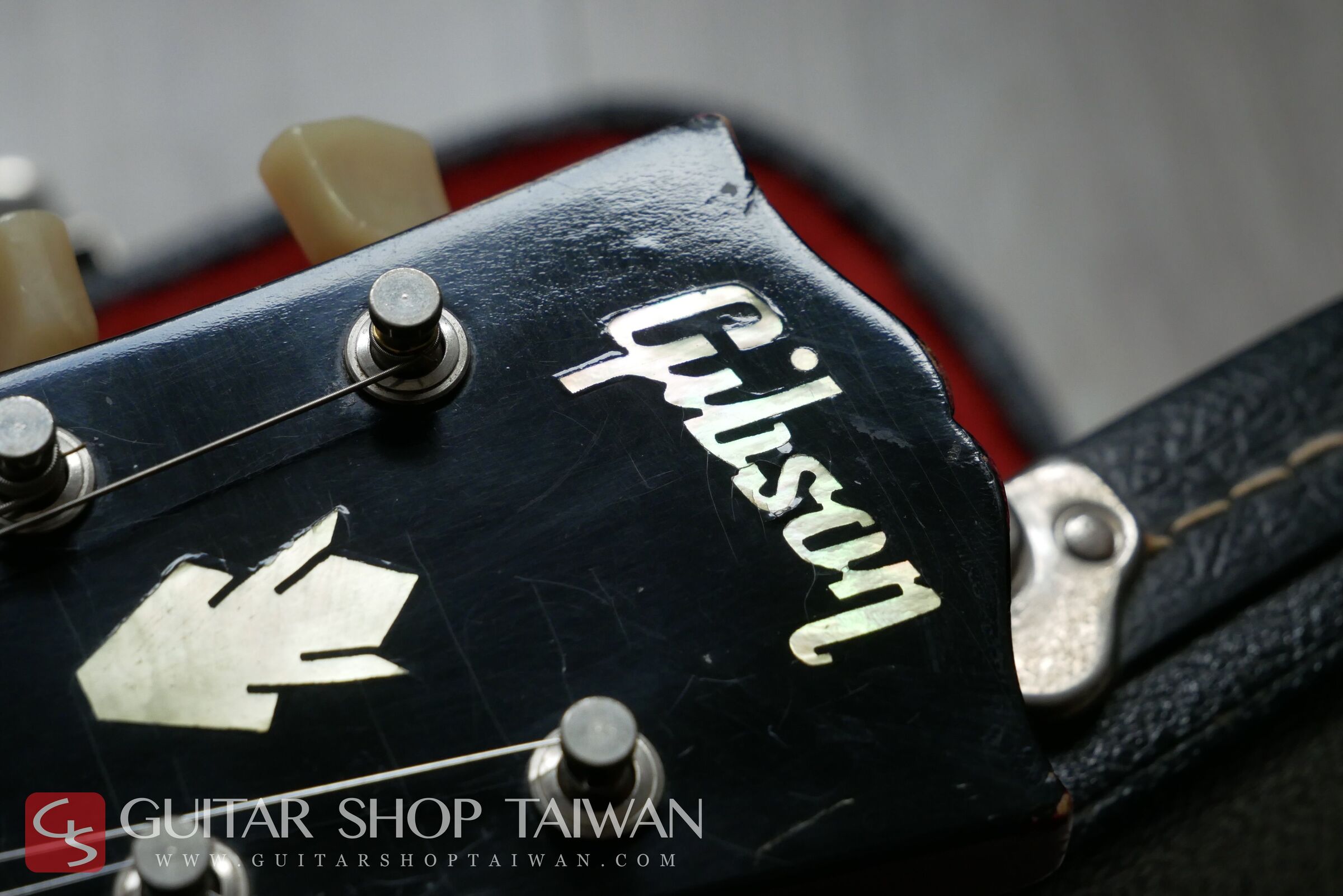
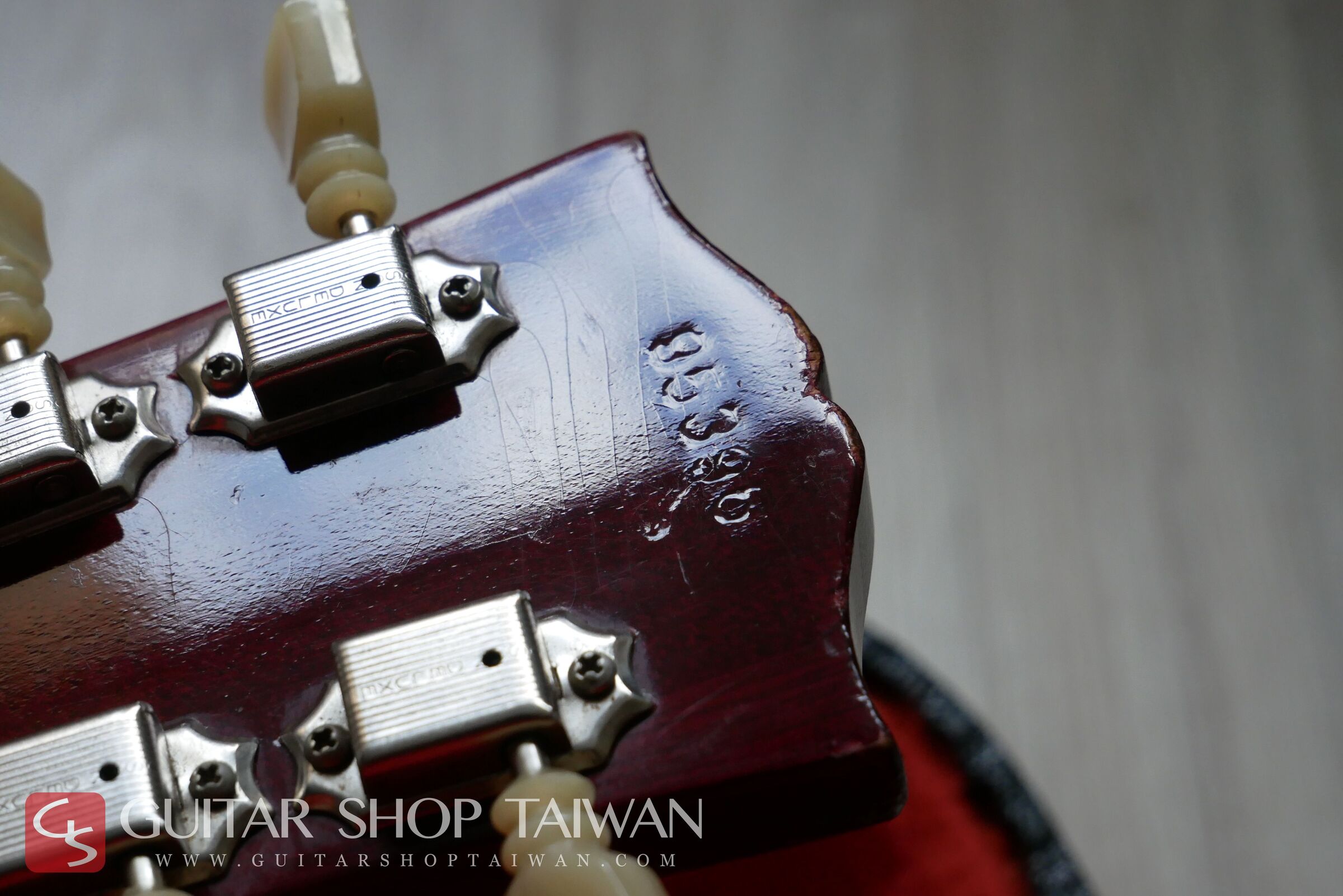
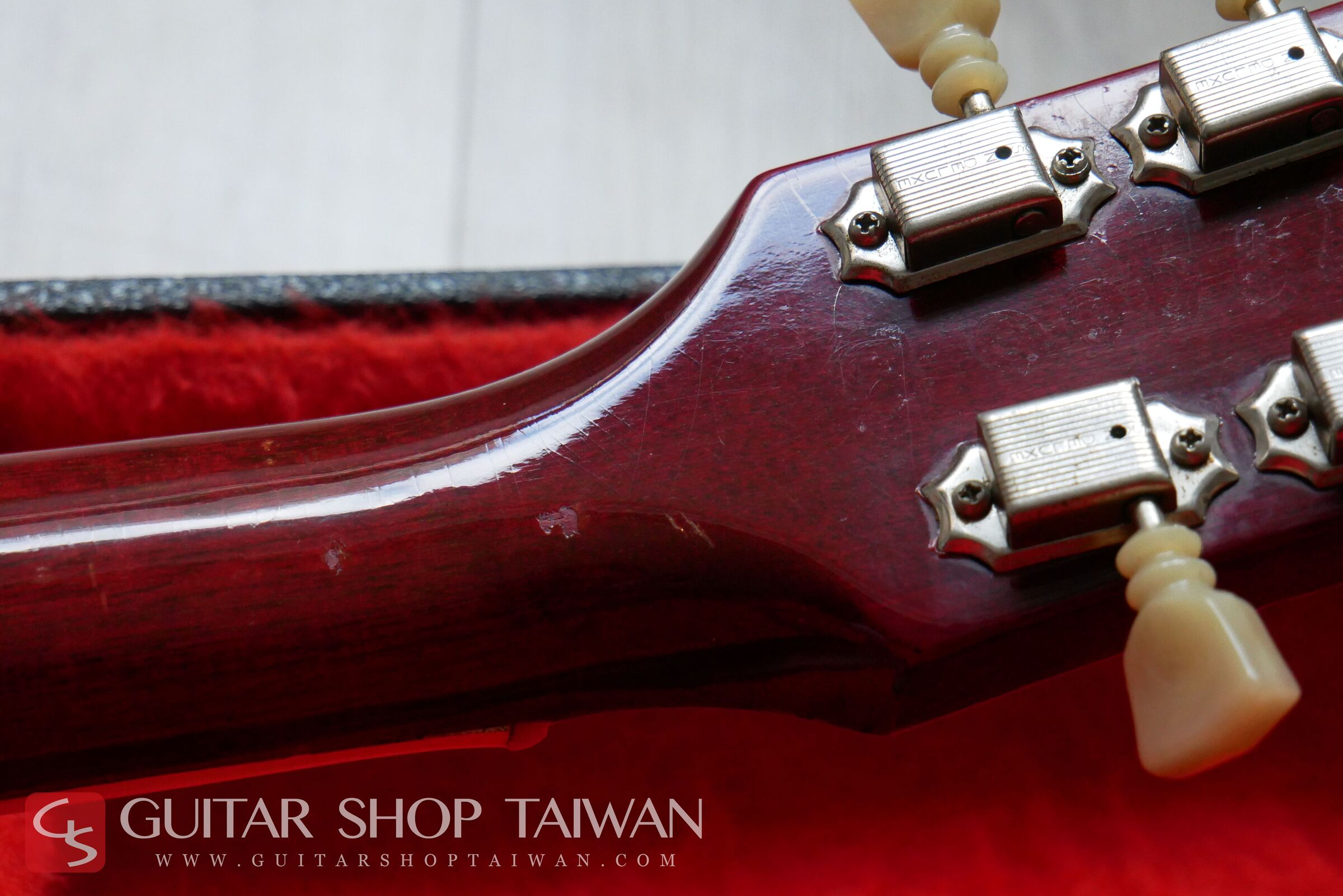
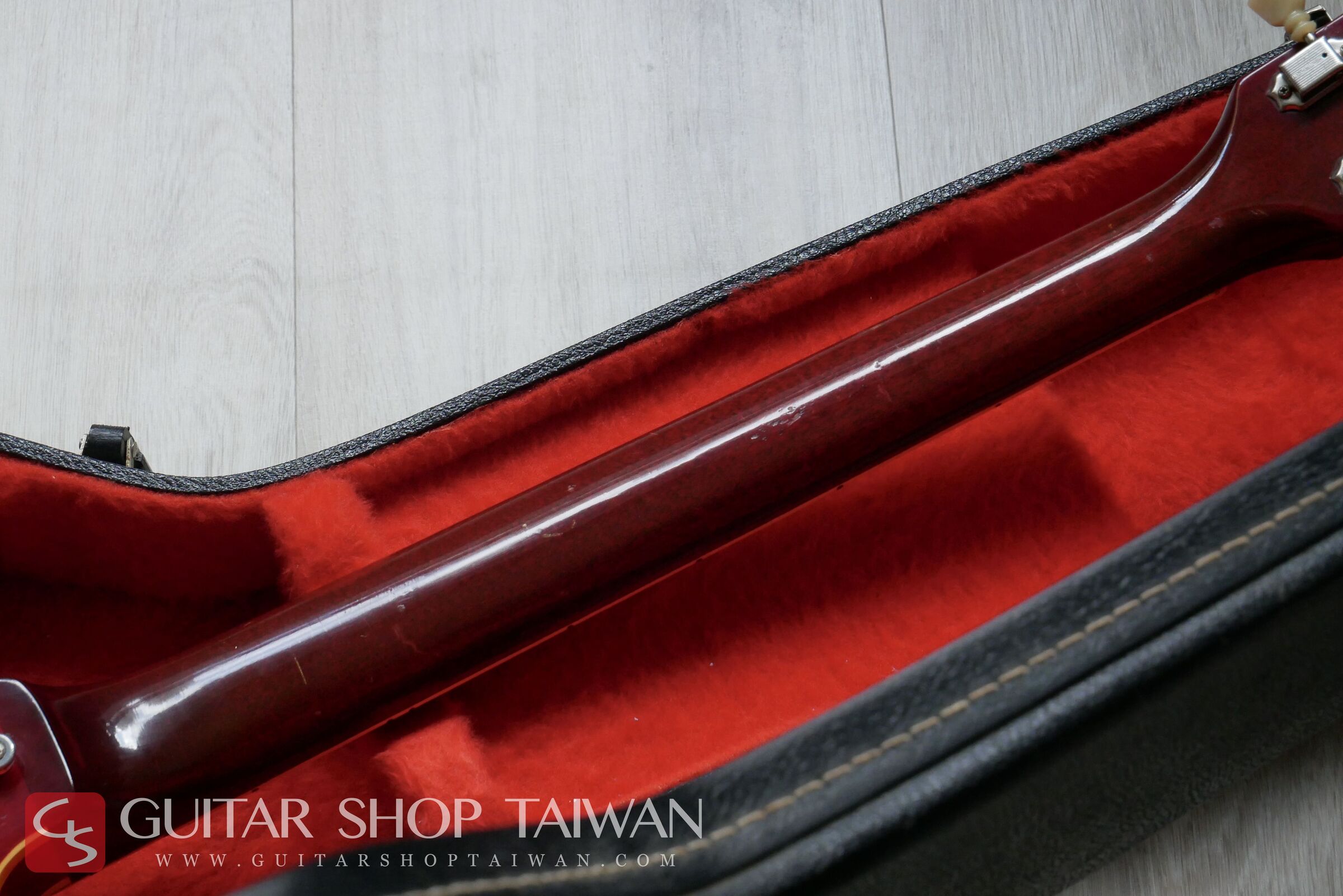
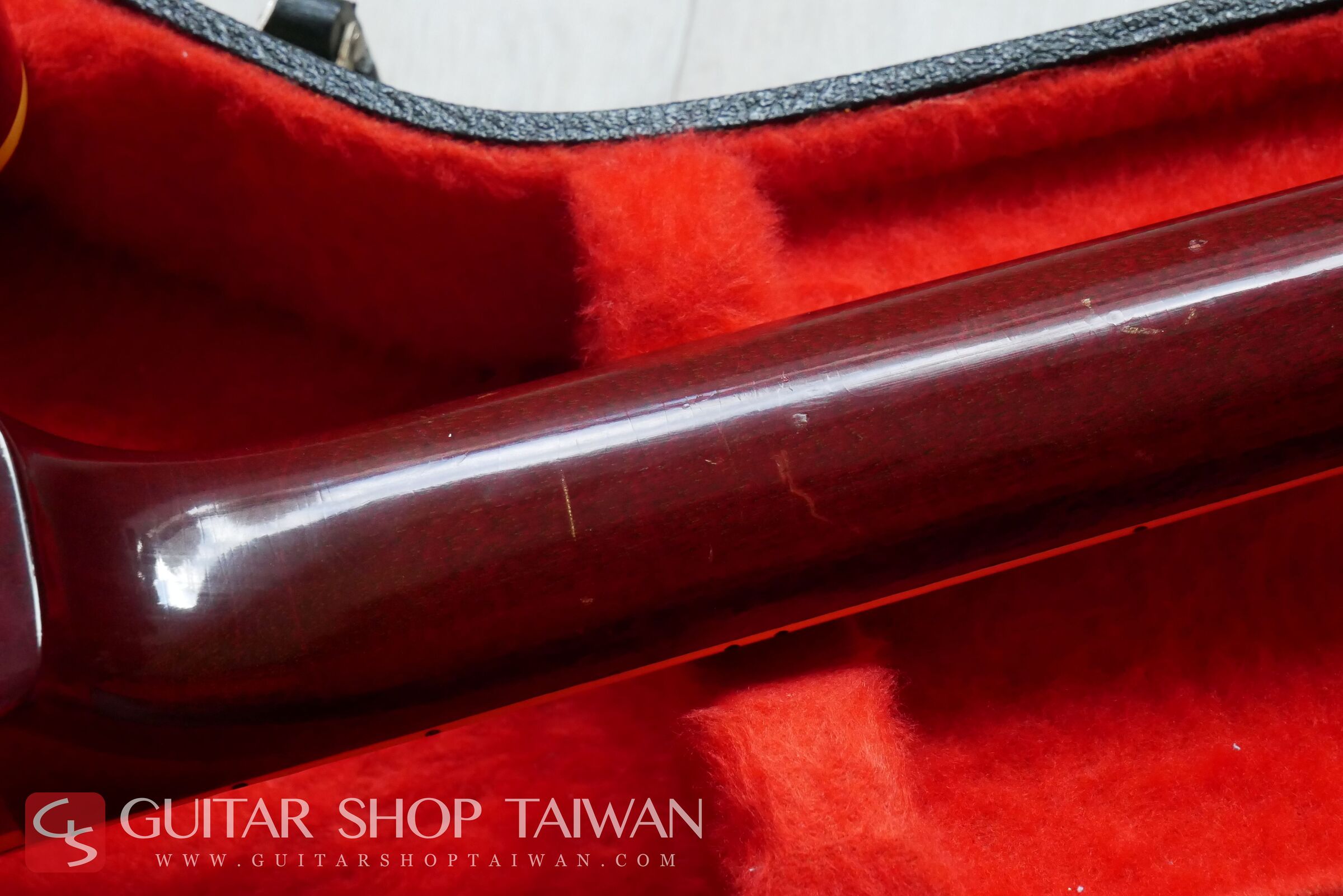
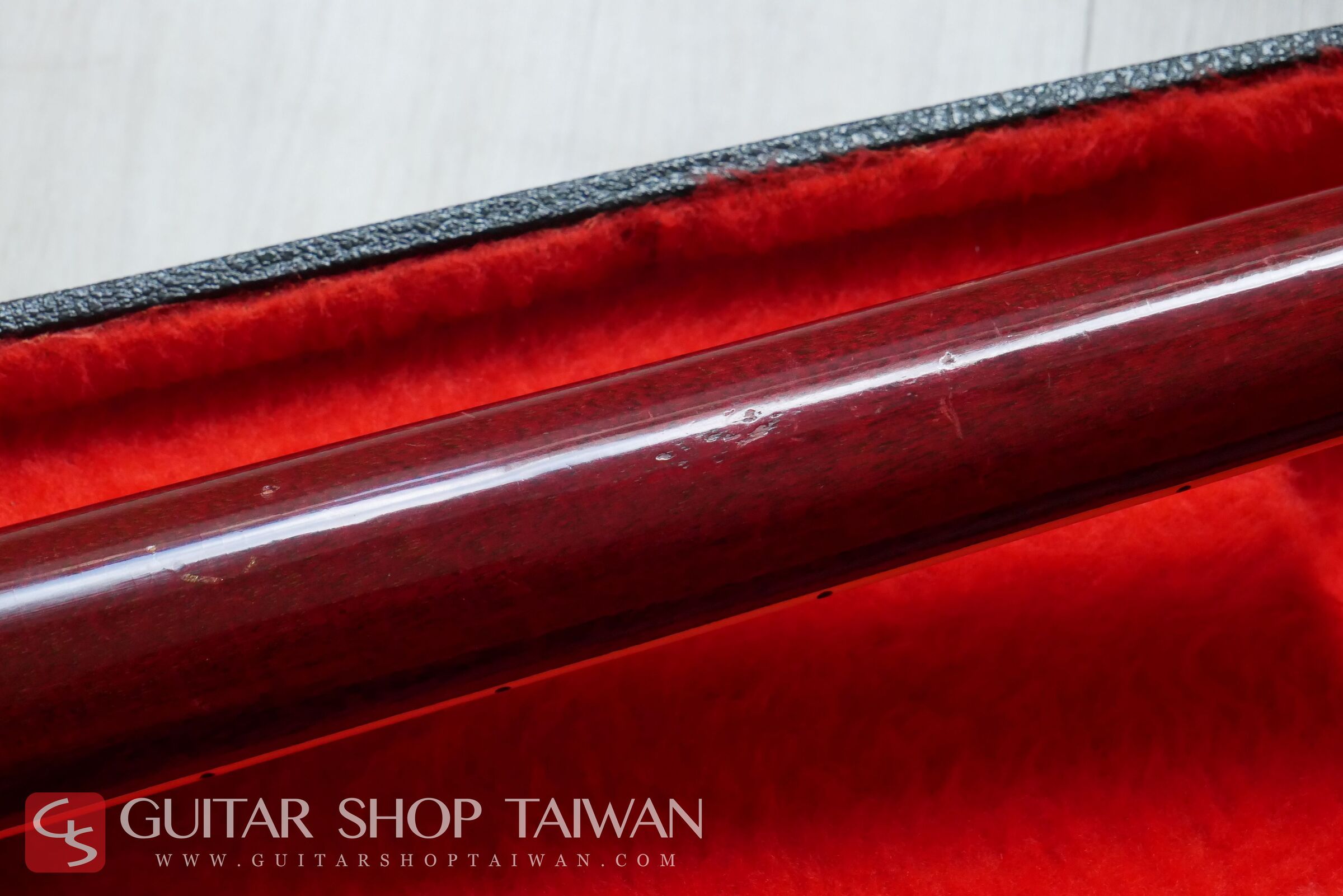
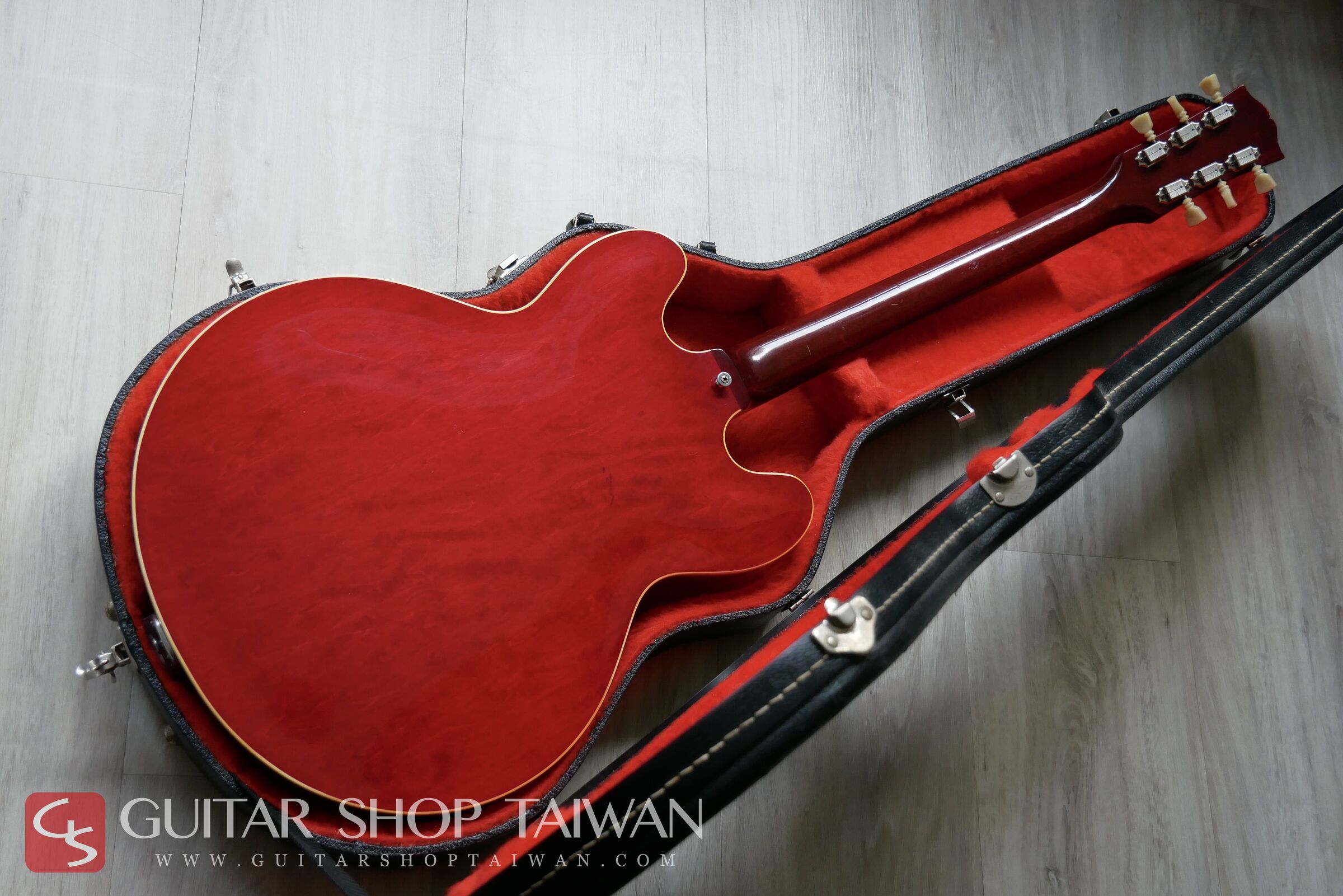
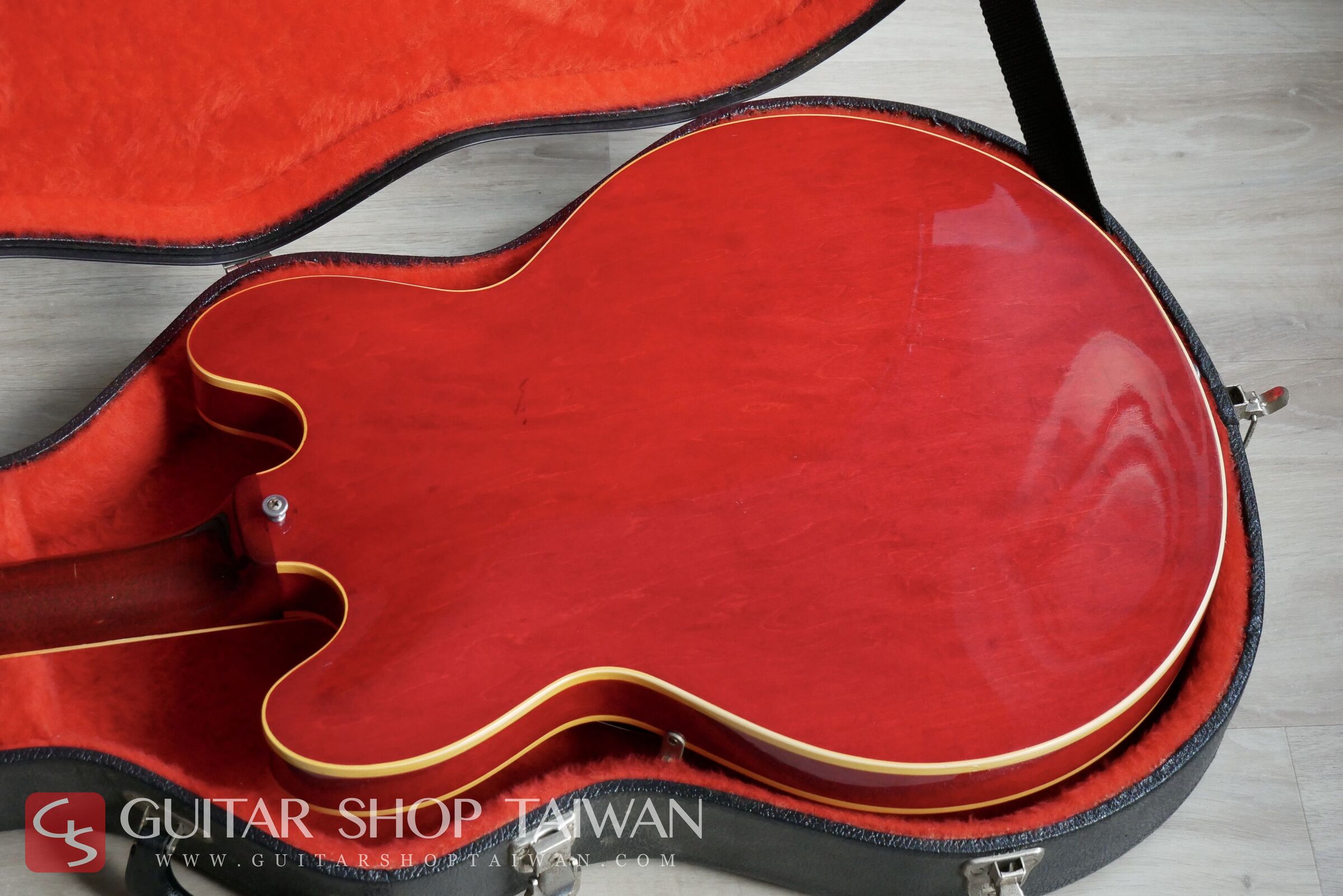
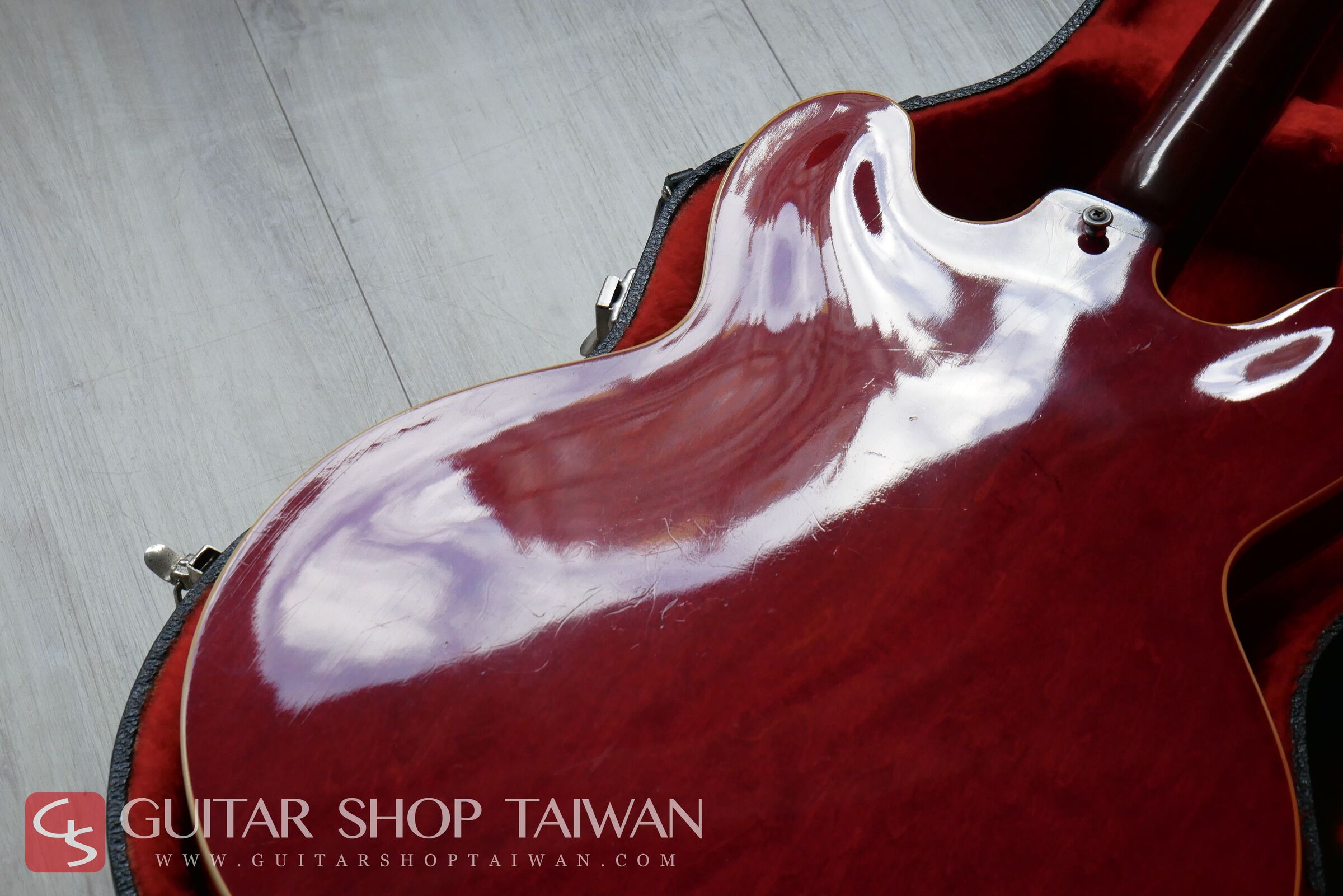
以Vintage吉他的狀態分級來說,這把吉他處於Excellent Condition,經典的櫻桃紅色漆面狀況極佳,琴身各處有著些許小傷痕與天然的Weather Checking,但沒有大面積的損傷與琴頸維修,連琴背也沒有過多的使用痕跡。吉他的上弦枕、Fret、弦鈕、Knobs、ABR-1琴橋、Bigsby、Sprague Black Beauty電容、未解焊過的Pots、琴身內標籤、Custom Made標牌等皆為原裝,唯獨琴盒並非當年,以六十五年的老琴,簡直不可思議。
在這物價持續通膨的世代,收藏古董琴是最好的投資選擇,只要是被Gibson原廠再次復刻過的50至60年代經典型號,依舊每年都在漲價,且能找到原汁原味、狀況又好並不容易。Gibson的歷史運輸紀錄顯示,1962年的ES-335只生產了610支Cherry Red,而其中選配Bigsby版本的更少,且考量到歷經超過半世紀,在市面上僅存的可能更少,導致這些真正1962年製的ES-335成為了最有收藏價值的型號之一,機會難得,有興趣的收藏家們把握機會。
售價NT$1,380,000,附Gibson原廠1970年代Case、Guitar Shop Taiwan專屬保固卡。本公司商品都經過嚴格檢驗與專業調整,一年保固、免費保養與完整的售後服務,安全有保障。歡迎刷卡、分期付款 (刷卡與分期服務僅限線上)。
所有文案與相片皆為本公司版權所有,未標示來源嚴禁轉載或商業使用。
In 1936, Gibson introduced its first Electric Spanish Archtop Guitar, the ES-150, featuring a single-coil pickup. The designation “ES” stands for Electric Spanish. By 1938, the more affordable ES-100 (later known as the ES-125) had joined the lineup, followed by the introduction of the high-end ES-250 and ES-300. The tremendous success of Gibson’s ES series helped establish the electric guitar as a mainstream musical instrument.
Following World War II, Gibson began refining and expanding the design of its ES electric guitars. In 1948, alongside the existing ES-125, ES-150, and ES-300, Gibson introduced dual P-90 pickups to the ES lineup for the first time. This was a groundbreaking development in electric guitar design. Under the leadership of then-president Ted McCarty, Gibson also introduced dual P-90 configurations to other popular hollowbody models, including the ES-175, Super 400, and L-5. In 1952, Gibson officially introduced the Les Paul Goldtop, its first solidbody electric guitar equipped with dual P-90 pickups. By 1954, electric guitar sales had surpassed those of hollowbody guitars for the first time. Over the following years, Gibson continued expanding its solidbody lineup with the introduction of the Junior, Special, and Custom models.
The history of the ES-335 dates back to 1957. In early 1957, Gibson president Ted McCarty approached chief woodwork engineer Larry Allers with a request to develop a new guitar based on the ES series, but incorporating a solid center block. The concept was to create a thin-bodied instrument that would occupy the middle ground between a solidbody and a fully hollow guitar. Drawing on Gibson’s extensive experience with ES models, the ES-335 was designed and brought into production in just over a year at Gibson’s factory in Kalamazoo, Michigan.
The solution developed by Ted McCarty and Larry Allers was particularly ingenious. They used kerf-cut spruce strips, allowing the wood to bend freely, and glued them to the front and back of the solid center block. These strips could follow the contours of the body, helping form the arched top and back during the lamination process. The original body construction consisted of a three-ply laminate of maple, poplar, and maple. The grain of the two outer maple layers ran in the same direction, while the middle poplar layer was oriented at 90 degrees to reinforce the structure. This innovative construction became the foundation of the ES-335, which made its debut in 1958.
This is a historically significant instrument: an authentic 1962 Gibson ES-335.
1962 was an important transitional year for the ES-335, featuring several highly desirable characteristics, including a Brazilian rosewood fingerboard, small block inlays, a one-piece mahogany neck, and a no-wire ABR-1 bridge. It is also equipped with a pair of original early Patent Number pickups. These first-generation Patent Number pickups, introduced around 1962, retained essentially the same construction as the PAF pickups produced from 1957 through early 1962. Following the patent approval for Gibson's humbucking pickup design, the bottom labels transitioned to the Patent No. 2,737,842 designation.
Gibson also employed an interesting factory practice when producing ES-335 models with Bigsby vibratos. The factory prepared the bodies with Stopbar mounting holes, accommodating the standard Stopbar configuration. For guitars ordered with a Bigsby, a metal plate bearing the words “CUSTOM MADE” was fitted over the original Stopbar mounting holes. This distinctive detail is an important identifying feature of factory-equipped Bigsby ES-335 models from the period.
The ES-335 offers a remarkably balanced tonal character. Compared with a fully solidbody guitar, it delivers a more natural and resonant response, while avoiding the excessive, sometimes muddy resonance associated with fully hollow guitars. Its solid maple center block effectively controls feedback at higher volumes, producing a pronounced midrange, clear yet smooth highs, and an exceptionally versatile tonal range.
With more than six decades of natural aging, the original tonewoods have developed a character that is difficult to replicate. The strings and body resonate together beautifully, delivering an exceptionally dry, airy, and open tonal character with remarkable dynamic response. Its voice is distinctly different from that of modern reissues.
In terms of vintage guitar condition grading, this instrument can be classified as Excellent Condition. The iconic Cherry Red finish remains in outstanding condition, showing only minor blemishes and natural weather checking throughout the body. There are no major areas of damage, nor any history of neck repair. Even the back of the guitar shows remarkably little wear for an instrument of this age.
The nut, frets, tuning machines, knobs, ABR-1 bridge, Bigsby vibrato, Sprague Black Beauty capacitors, unsoldered original potentiometers, internal factory label, and CUSTOM MADE plate are all original. The only exception is the case, which is not from the period. Considering that this guitar is approximately 64 years old, its originality and exceptional condition are truly remarkable.
In an era of persistent inflation, vintage guitars have increasingly attracted collectors as long-term investment assets. Classic Gibson models from the 1950s and 1960s that have subsequently been reissued by the factory continue to appreciate in value year after year. Finding an authentic vintage example that retains its original components and remains in such exceptional condition is becoming increasingly difficult.
According to Gibson's historical shipping records, 610 Cherry Red ES-335 guitars were shipped in 1962. The number originally equipped with the optional Bigsby vibrato was only a fraction of that total. Considering the passage of more than six decades, the number of surviving examples in comparable original condition is likely even smaller.
These authentic 1962 Gibson ES-335 models therefore represent particularly desirable instruments in the vintage guitar market.
A rare opportunity to acquire an exceptional piece of Gibson history. Collectors and enthusiasts are invited to inquire while this opportunity remains available.
Comes with the 1970s Gibson hardshell case.
The shipping fee includes insurance. We usually declare a low value on the shipping invoice and the insurance will follow the full value of the goods.